 English
 عربى
عربىScientific Spinal Protection: How to Select the Ideal Protrusion Height for a Memory Foam Lumbar Cushion Based on Spinal Lordosis
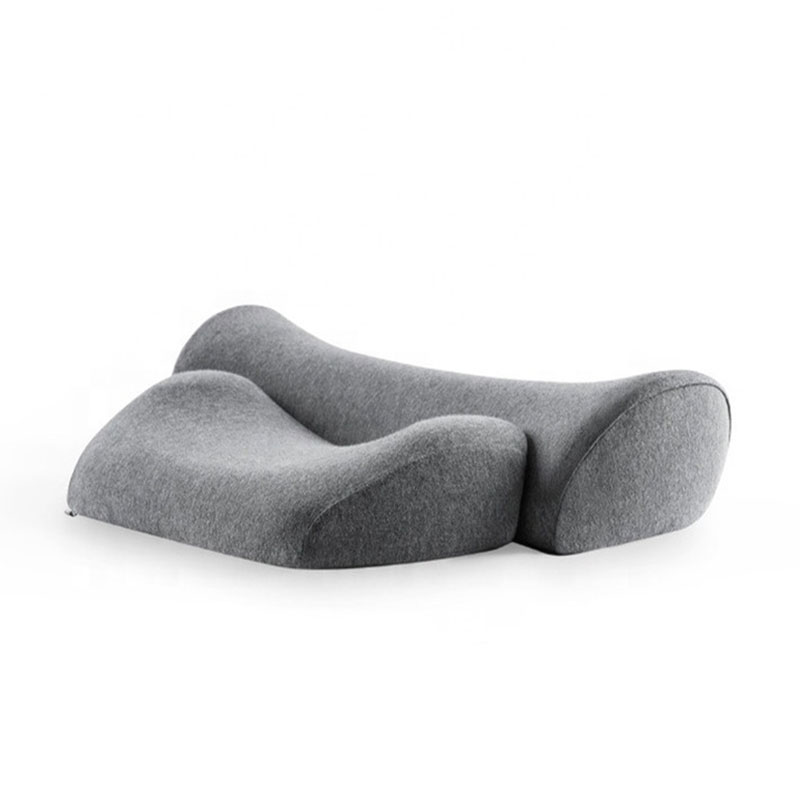
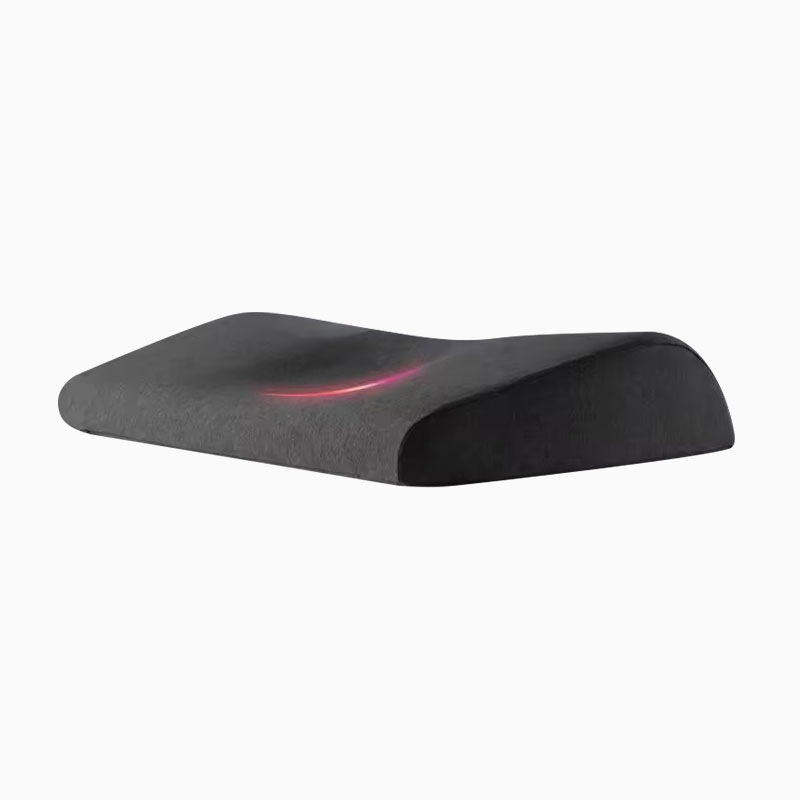
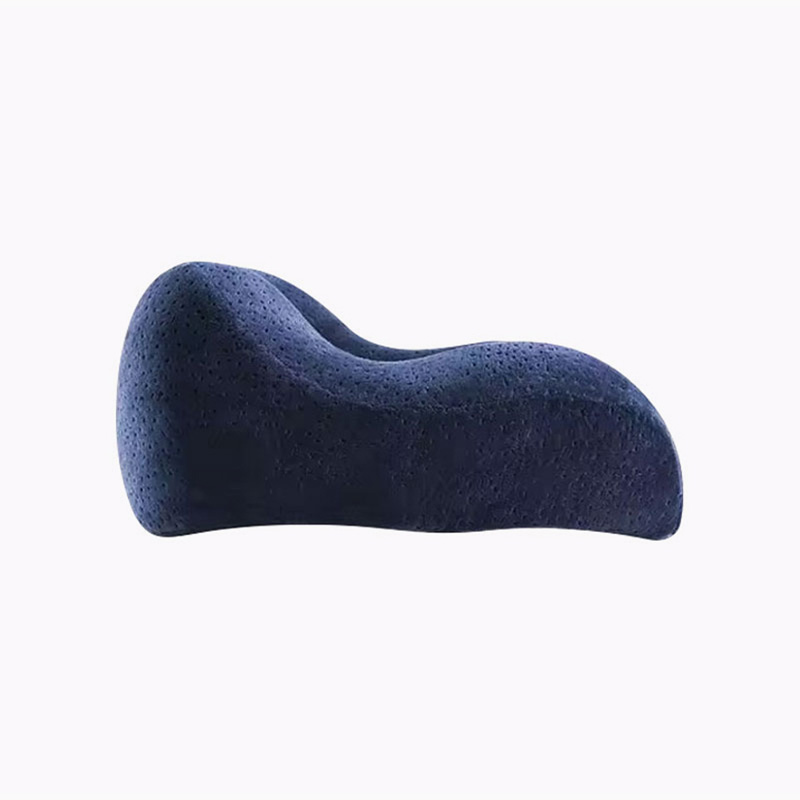
In the field of Ergonomics, the core logic of Lumbar Support is not simply to provide softness, but to reconstruct and maintain the natural Lordosis curve of the human spine. When selecting a Memory Foam Lumbar Cushion, the Protrusion Height is the critical parameter that determines its functional success. Insufficient height results in a "hollow" support, while excessive thickness forces the spine into hyperextension, potentially causing secondary injury.
The Anatomical Foundation of Lordotic Curve
The human spine is not a straight line; the lumbar segment (L1-L5) naturally curves toward the abdomen, forming an arc. When sitting, the pelvis often tilts backward, causing this curve to flatten or even reverse, which increases pressure on the Intervertebral Disc.
An ideal Memory Foam Lumbar Cushion should fill the gap between the chair backrest and the surface of the skin. Selecting the professional support height requires reference to three core dimensions:
Individual Differences in Spinal Depth
The depth of the Lordotic Curve varies from person to person. Generally, individuals with a leaner build have thinner back muscles and a more pronounced spinal curvature, often requiring a cushion with a Protrusion Height of 8-10cm. Conversely, individuals with more developed back muscles or a fuller physique may only need an additional support height of 6-8cm due to the natural padding provided by fat or muscle layers.
If the Memory Foam Density is high enough, a thinner protrusion can still provide excellent Support, preventing the cushion from pushing the user too far forward toward the edge of the seat.
Dynamic Response and Material Density
When selecting height, one must look beyond static dimensions. The core characteristic of Memory Foam is its Viscoelasticity.
| Low Density Memory Foam | A nominal height of 12cm may compress to 3cm under weight, making the support unstable and unable to maintain the physiological curve. |
| High Density Memory Foam | Even with a moderate initial height (e.g., 9cm), it provides stable support based on body heat and weight, maintaining an ideal effective support height of 5-6cm. |
For users searching for the Best Lumbar Support for Back Pain, they are essentially looking for a product that can consistently maintain its Shape under long-term use.
Height Micro-Adjustment for Different Scenarios
Office Chair: Most modern office chairs already have a slight contour. It is recommended to choose a Protrusion Height of 7-9cm with a Butterfly Shape design, focusing on lateral wrapping and stability.
Car Seat: The automotive environment is constrained by pedal distance. An oversized Lumbar Cushion can alter the driver's Legroom and line of sight. It is advisable to choose a model with firm support but moderate thickness (approx. 6-8cm) to ensure safe driving and proper Spinal Alignment.
Consequences of Incorrect Height: Hyperextension and Slumping
If the Protrusion Height is too high, it leads to Hyperextension of the lumbar spine, forcing the upper back away from the backrest and significantly increasing pressure on the thoracic and cervical spine. On the other hand, if the height is too low, the user will involuntarily adopt a Slumping posture, rendering the Pressure Relief properties of the Memory Foam completely ineffective.
The Three-Finger Measurement Method for Assessment
Users can perform a self-check by sitting straight against a wall and measuring the distance between the deepest part of their lower back and the wall surface.
If the distance is less than 5cm, a Contoured slim model is recommended.
If the distance is between 5-10cm, a standard Memory Foam Lumbar Cushion is the optimal choice.
Choosing the height of a Memory Foam Lumbar Cushion is a science of Spinal Alignment. By identifying individual curvature characteristics and combining them with High-density material properties, one can achieve true decompression.
 previous post