 English
 عربى
عربىDo Lumbar Support Cushions Really Work, or Are You Just Sitting Wrong
Why Your Chair Might Be Hurting Your Back
Sitting and Spinal Pressure
In modern office environments, we spend most of our time sitting. While sitting seems easier than standing, this posture actually exerts far more pressure on your spine than you might imagine. The human spine has a natural "S-shaped" curve, where the lumbar region (lower back) curves inward—a state known as lumbar lordosis. When sitting in a standard office chair without support, our muscles gradually fatigue, causing the body to slouch forward unintentionally.
From "S" to "C": Prolonged sitting without support forces the healthy S-curve to flatten or even reverse into a "C-curve."
Disc Compression: Research indicates that the pressure on spinal discs while sitting is 1.4 to 1.9 times higher than when standing. This pressure can damage the annulus fibrosus and increase the risk of disc herniation.
Muscle Fatigue: To maintain balance, the lower back muscles must contract continuously, leading to reduced blood flow, accumulation of metabolic waste, and subsequent aching.
The Purpose of a Memory Foam Lumbar Cushion
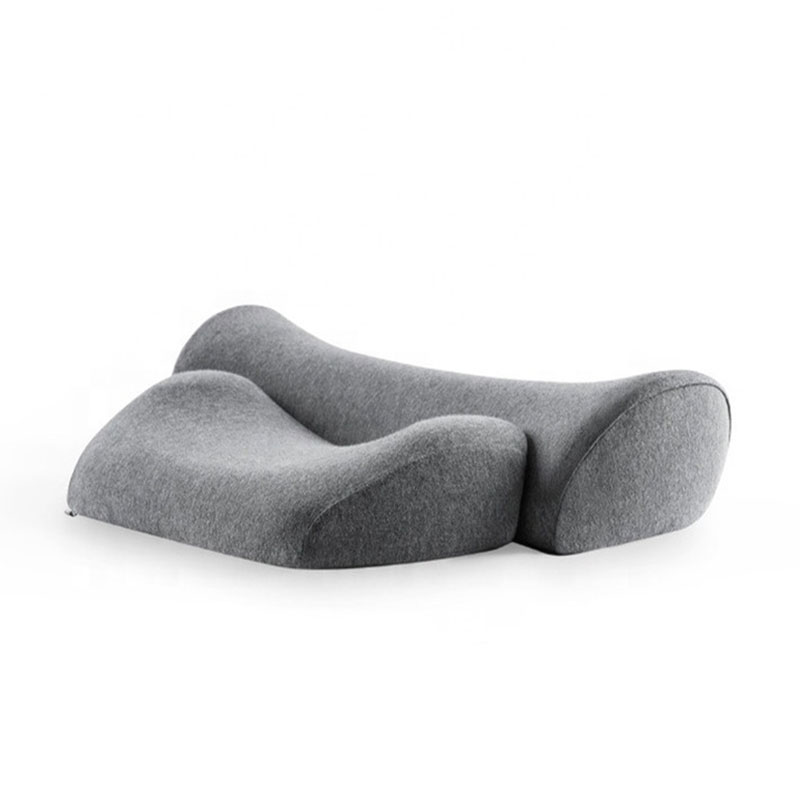
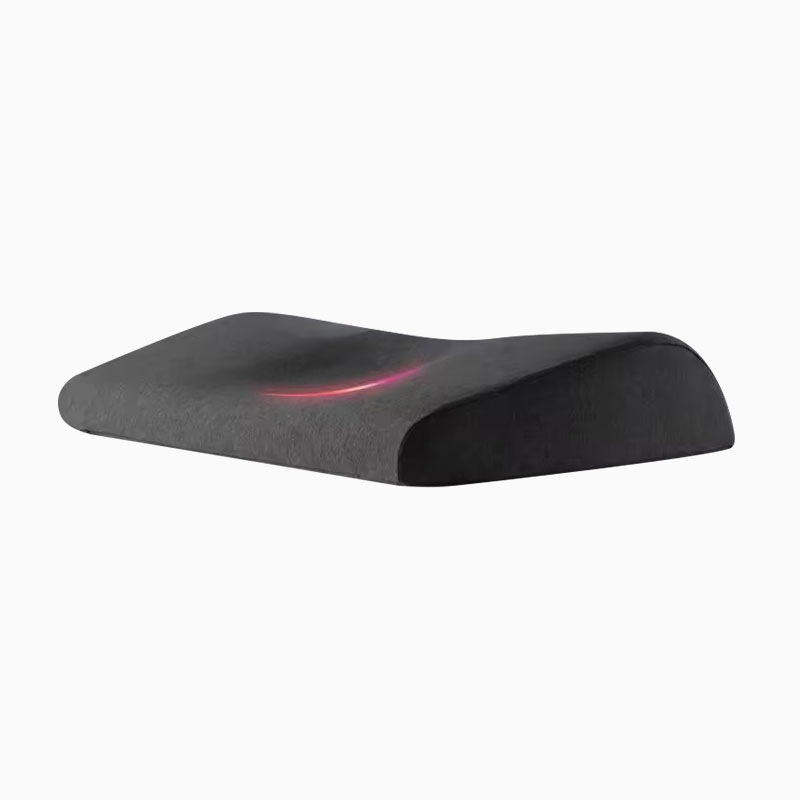
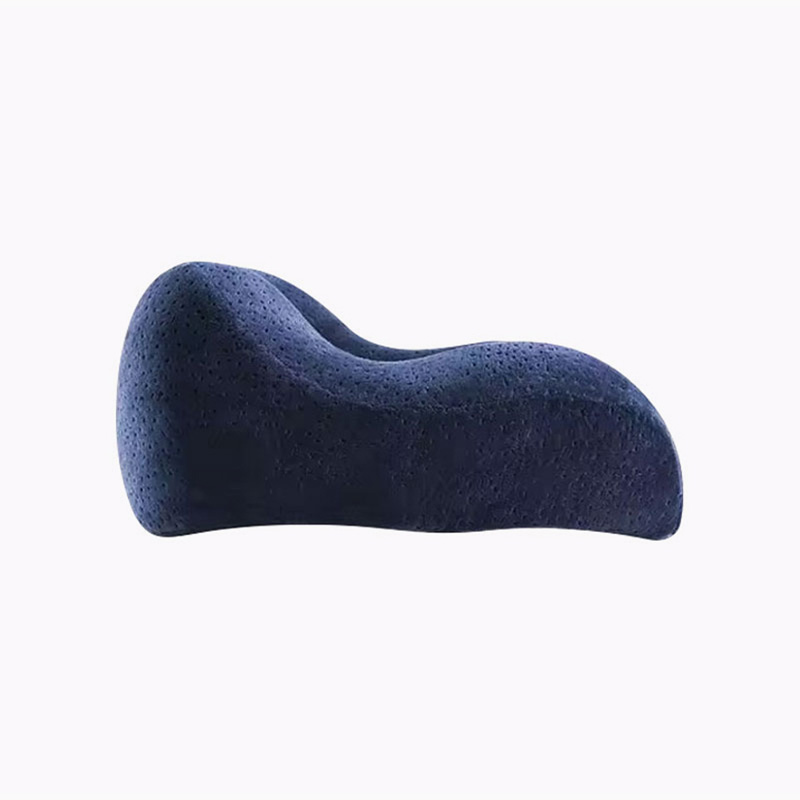
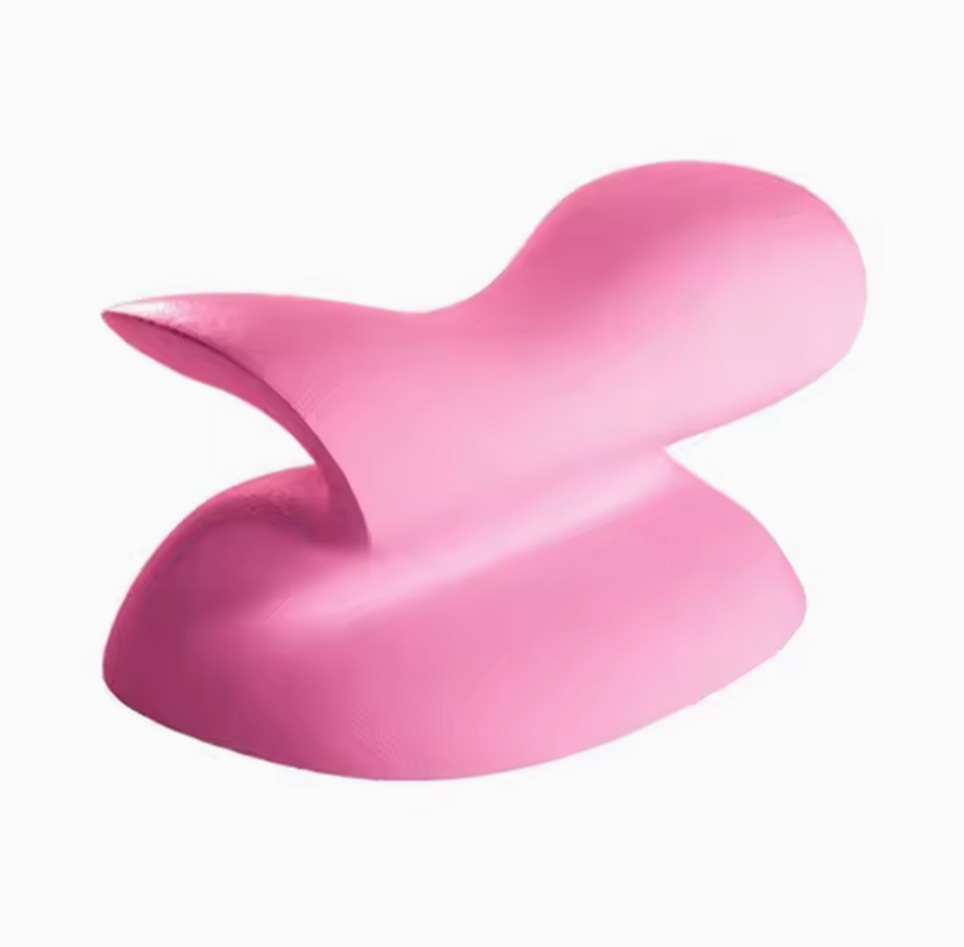
This is exactly where a Memory Foam Lumbar Cushion comes into play. It is more than just a "pillow"; it is a posture corrector.
Filling the Gap: Its physical ergonomic design precisely fills the void between the lower back and the chair back, restoring the natural lumbar lordosis.
Active Pressure Relief: Unlike ordinary materials, a Memory Foam Lumbar Cushion features a unique molecular structure that micro-adjusts based on body temperature and pressure, distributing concentrated pressure points across the entire back surface.
Sitting Pressure Parameter Comparison
To visualize why extra support is necessary, refer to the following comparison of lumbar spine pressure in different positions (based on a standing baseline of 100%):
| Posture | Lumbar Pressure (Relative %) | Impact on Spinal Health |
| Supine (Lying Flat) | 25% | Minimal pressure; spine is fully relaxed |
| Sideways Lying | 75% | Low pressure |
| Standard Standing | 100% | Normal physiological load |
| Correct Sitting (Supported) | 110% - 130% | Moderate pressure; can be further reduced by a cushion |
| Slouched Sitting (Unsupported) | 150% - 185% | High Risk; leads to muscle strain and disc issues |
| Forward Leaning Sitting | Over 200% | Extreme risk; massive disc pressure |
By using a Memory Foam Lumbar Cushion, you can shift your body from the high-risk 185% pressure state back to a safer range near 110%.
The Science Behind Lumbar Cushions: Do They Really Work?
Physical Support Mechanism
The effectiveness of a lumbar cushion is not a placebo effect; it is a result of biomechanics and materials science. Specifically, a Memory Foam Lumbar Cushion protects the spine through the dual mechanisms of physical support and pressure distribution. As mentioned, the lumbar spine naturally curves inward. When you sit, gravity forces the spine to collapse downward.
Space Filling: The geometric shape of a Memory Foam Lumbar Cushion is ergonomically designed to fit precisely into the arc between the lumbar vertebrae and the chair back.
Maintaining Lordosis: It provides a forward push that maintains the "lordotic" posture. This support reduces the involuntary contraction of back muscles, thereby relieving fatigue.
Pressure Distribution Mechanism
The reason a Memory Foam Lumbar Cushion is superior to traditional cushions lies in its "slow rebound" characteristic.
Viscoelasticity: Memory foam is a viscoelastic material. When compressed by body weight, the molecules shift to distribute pressure evenly across the contact surface rather than pushing back against the body.
Temperature Sensitivity: High-quality memory foam softens in response to body heat, allowing it to perfectly contour to each individual's unique spinal profile for "custom-made" support.
Performance Comparison of Different Cushion Materials
| Performance Metric | Standard Foam (Polyurethane) | Memory Foam Lumbar Cushion | Inflatable Support | Mesh Support |
| Rebound Type | Fast (High counterforce) | Slow (Absorbs pressure) | Rigid support | Flexible suspension |
| Pressure Uniformity | Poor (Concentrated points) | Excellent (Even distribution) | Average | Poor |
| Stability | Collapses easily | Long-lasting support | Prone to leaks | Easy to loosen |
| Contouring | Low (Fixed shape) | High (Molds to body) | Medium | Average |
| Shock Absorption | Weak | Very Strong | None | None |
Experimental Data: Supported vs. Unsupported
In biomechanical lab tests measuring peak pressure between the back and the chair using sensors:
Unsupported Sitting: Pressure concentrates at the L4 and L5 segments, reaching peaks of 15-20 kPa.
Standard Cushion: Pressure is slightly relieved, but due to material stiffness, peaks remain around 10-12 kPa.
Memory Foam Lumbar Cushion: Pressure is evenly dispersed, with peaks significantly dropping to 4-6 kPa.
Why Choose Memory Foam Over Other Materials?
Material Comparison and Micro-Advantages
In the world of lumbar support, the material determines the final experience. The Memory Foam Lumbar Cushion remains the industry benchmark because it balances "flexibility" and "support."
Perfect Contour: Common fiber-filled cushions often collapse at pressure points and fail to provide support in the gaps. A Memory Foam Lumbar Cushion acts like a fluid, performing "precision filling" according to your lumbar contour.
Eliminating Counterforce: Springs or high-rebound foam create an outward "push" that fights against your back. Memory foam absorbs body weight, creating almost zero counterforce.
Core Parameter Comparison: Memory Foam vs. Other Materials
| Parameter | Memory Foam | Natural Latex | Polyester Fiber | Gel |
| Density | 40 - 80 kg/m³ | 60 - 70 kg/m³ | Extremely Low | 900 - 1000 kg/m³ |
| Recovery Time | 3 - 5 Seconds | Less than 1 Second | Non-recovering | Instant |
| Pressure Relief | Extreme (90%+) | Moderate | Low | High (but lacks depth) |
| Breathability | Medium | High | High | Extremely High |
| Lifespan | 3 - 5 Years | 5 - 10 Years | 0.5 - 1 Year | 5+ Years |
Unique Advantages of a Memory Foam Lumbar Cushion
When evaluating a Memory Foam Lumbar Cushion, focus on these two physical indicators:
Density: Low density (less than 40 kg/m³) lacks support; high density (50-80 kg/m³) provides solid, deep support that keeps the spine from curving even for heavier users.
Hardness (IFD) and Temp-Sensitivity: Excellent cushions are temperature-sensitive—they stay firm at room temperature to maintain shape but soften upon contact with body heat to fit the skin.
How to Correctly Use Your Memory Foam Lumbar Cushion
Precision Positioning
Owning a high-quality Memory Foam Lumbar Cushion is only the first step. If placed incorrectly, it can increase the burden on the thoracic or cervical spine. The center point (the thickest or most convex part) should align with the L3 to L5 segments of your spine—the most concave part of your lower back.
Bottom Gap: Once installed correctly, there should usually be a 5 - 10 cm gap between the bottom of the cushion and the seat surface.
Vertical Alignment: Ensure the Memory Foam Lumbar Cushion is centered vertically; do not let it tilt to the left or right.
Chair Matching and Adjustment Tips
| Chair Type | Suggested Height (from seat) | Adjustment Focus |
| Office Chair | 10 - 15 cm | Tighten straps to prevent sliding. |
| Car Seat | 5 - 8 cm | Place lower to support just above the sacrum. |
| Deep Sofa | 0 - 5 cm | Place at the very bottom to move the torso forward. |
| Gaming Chair | 10 - 12 cm | Use the strap system to lock it at the lumbar arc. |
Height and Angle Checklist
Knee Angle: Knees should be at 90° to 100°, with feet flat on the floor.
Eye Level: After adding the cushion, adjust your monitor so your eyes are level with or slightly above the top edge (10° downward view).
Torso Angle: The ideal sitting position is not 90° bolt-upright, but a slight recline where the torso and thighs form a 100° to 110° angle.
4 Key Indicators for Choosing the Ideal Lumbar Cushion
Density and Firmness
Density is the most important parameter determining quality.
Suggestion: A high-quality Memory Foam Lumbar Cushion should have a density between 50 - 80 kg/m³.
Support Performance: High density ensures better molecular tightness and provides deep support with a lifespan of 3-5 years.
Ergonomic Curve Design
A good Memory Foam Lumbar Cushion should feature a "3D profile":
Lateral Wings: Slight protrusions on the sides to wrap around the waist and prevent lateral tilting.
Thickness Parameter: The center thickness should generally be 8 - 12 cm. Too thin offers no support; too thick pushes the user out of the seat.
Cover Material and Breathability
4D Breathable Mesh: A honeycomb structure that allows for air circulation.
Gel-infused Memory Foam: Some high-end cushions incorporate cooling gel particles to reduce surface temperature by about 1-2°C.
Stability System
No matter how good the foam is, if the cushion slides down the chair, its effect is zeroed out.
Dual-Strap System: Compared to a single strap, dual straps lock the cushion from two dimensions.
Non-slip Bottom: Check if the back of the Memory Foam Lumbar Cushion has rubber non-slip granules.
Purchase Parameter Summary
| Dimension | Entry Level | Professional Grade |
| Memory Foam Density | 40 - 45 kg/m³ | 60 - 80 kg/m³ |
| Recovery Time | 1 - 2 Seconds | 3 - 5 Seconds |
| Cover Fabric | Standard Polyester | 4D Mesh / Velvet |
| Fixing Method | Single Elastic Strap | Dual Adjustable Straps + Non-slip |
| Safety Certification | None | CertiPUR-US or OEKO-TEX |
FAQ
Q: Is a Memory Foam Lumbar Cushion only for people with back pain?
A: No. Prevention is better than cure. For those sitting more than 4 hours a day, the cushion shares the spinal pressure to prevent healthy spines from developing chronic strain.
Q: Will the memory foam cushion deform over time?
A: High-quality memory foam has excellent resilience. However, a high-density Memory Foam Lumbar Cushion typically has a lifespan of 3-5 years. Avoid direct sunlight on the foam core.
Q: Does memory foam get hard in cold weather?
A: Yes. Because it is temperature-sensitive, it may feel firmer in winter. It will soften and contour to your body within minutes of contact with your body heat.
Q: Is the cushion washable?
A: Never wash the memory foam core! Water destroys the molecular structure and elasticity. Only wash the removable cover and air the core in a shaded, ventilated area.
Q: Can it cure a herniated disc?
A: It is an auxiliary tool designed to relieve pressure and improve posture. Serious conditions require professional medical advice.
Q: Does it get hot in the summer?
A: It is recommended to choose models with breathable mesh covers or gel-infused memory foam to manage heat.
Q: Why does my back feel more tired after using the cushion?
A: This is usually a "posture adaptation period." If you are used to slouching, the cushion forces your muscles into a correct alignment, which can cause fatigue in weaker muscle groups initially. Try using it for 2 hours a day for the first week, then gradually increase.
 previous post