 English
 عربى
عربىIn-depth Comparison: Why You Cannot Simply Use an Office Chair Lumbar Support in a Car Environment
In the field of Ergonomics, many users harbor a cognitive bias: they believe that as long as a product is a Memory Foam Lumbar Cushion, its function is equivalent whether placed in an office or a vehicle cabin. However, from the perspective of spinal biomechanics and dynamic physics, the requirements for Lumbar Support in a Car Seat versus an Office Chair are fundamentally different. This distinction concerns not only comfort but directly impacts Spinal Health and driving safety.
Static Support vs. Dynamic Vibration Dampening
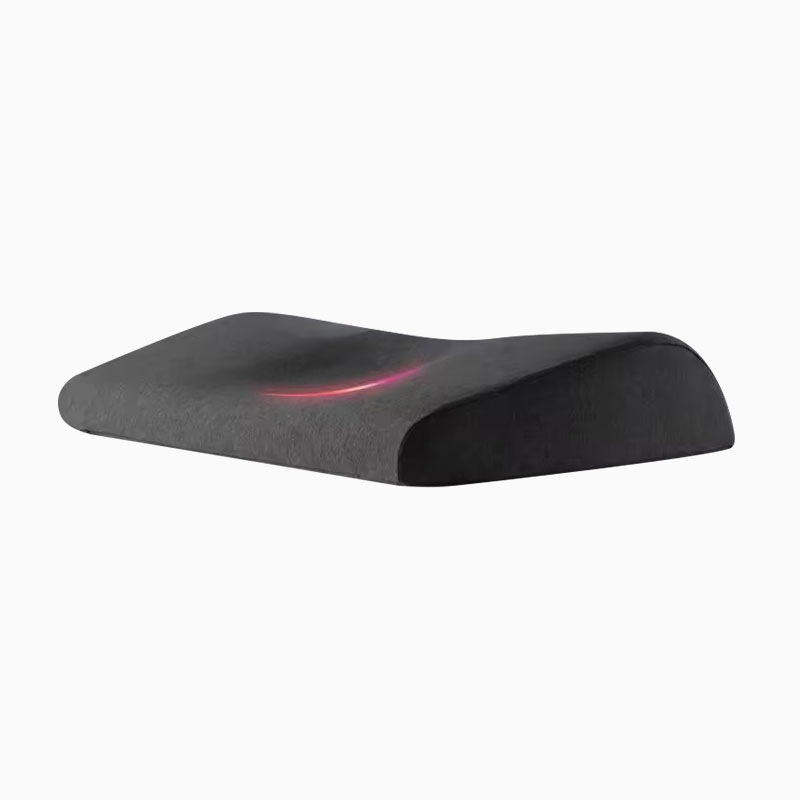
The usage scenario for an Office Chair is typically static. When working, a user’s center of gravity remains relatively stable. The primary task of the lumbar cushion is to fill the gap of the Lordotic Curve and reduce static pressure on the Intervertebral Disc. In this setting, the cushion can be designed wider and thicker, focusing on soothing muscle fatigue.
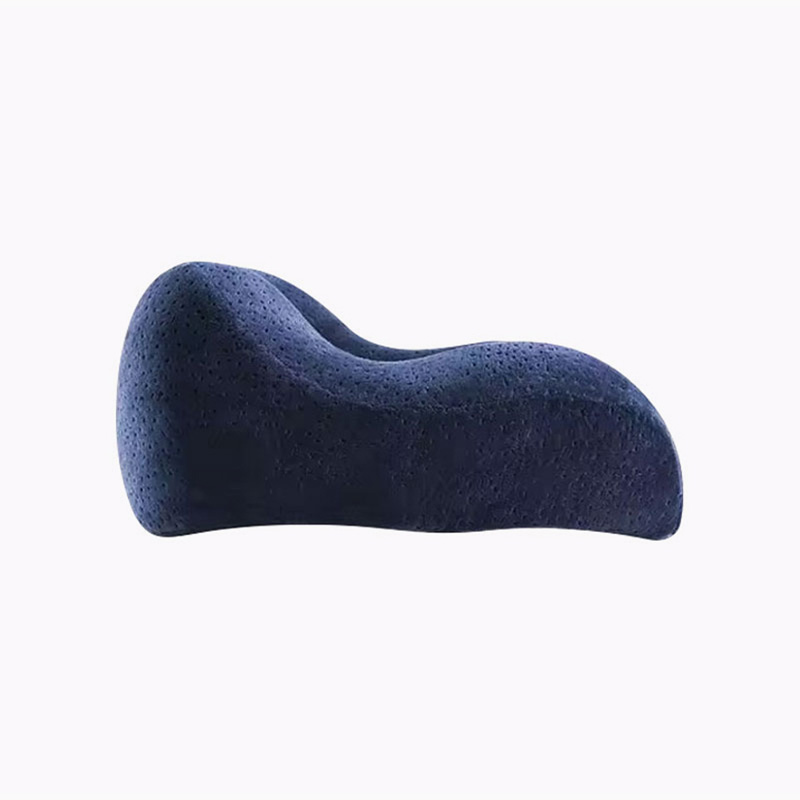
In contrast, a Car Seat exists within a high-frequency dynamic environment. Drivers face centrifugal forces during acceleration, braking, and cornering. Here, a Memory Foam Lumbar Cushion must possess Vibration Dampening capabilities in addition to providing support. If a soft office-style cushion is used, it may shift under centrifugal force, causing the driver’s posture to become unstable and potentially affecting the precise control of the brake and accelerator pedals.
Biomechanical Differences: Legroom and Vision Control
On an office chair, a person's thighs and torso usually form an angle of approximately 90 degrees with feet flat on the floor. Under these conditions, the thickness limits for a cushion are relatively relaxed.
In a driver's seat, the situation changes entirely:
| Legroom | Drivers must extend their lower limbs to operate pedals. If a cushion is too thick, it pushes the torso forward, causing excessive knee flexion and leading to Knee Pain during long drives. |
| Eye Point and Safety | An oversized cushion alters the driver’s Eye Point. More critically, it creates a gap between the back and the seat, moving the head away from the Active Head Restraint, which significantly increases the risk of Whiplash Injury during a rear-end collision. |
Material Density and Viscoelasticity Adaptation
The choice of Memory Foam density also varies between these two scenarios. For the office, a Medium-Density foam is often preferred as it feels soft and provides immediate Pressure Relief for sedentary fatigue. However, for a Car Seat, one must choose High-Density foam with superior compressive resistance.
Due to the frequent micro-adjustments made while driving, low-density foam will collapse quickly under heat and pressure, losing its supportive effect. Only high-density materials can maintain a stable Shape over long durations and absorb the physical shocks coming from the road surface.
Design Contours: Lateral Support vs. Freedom of Movement
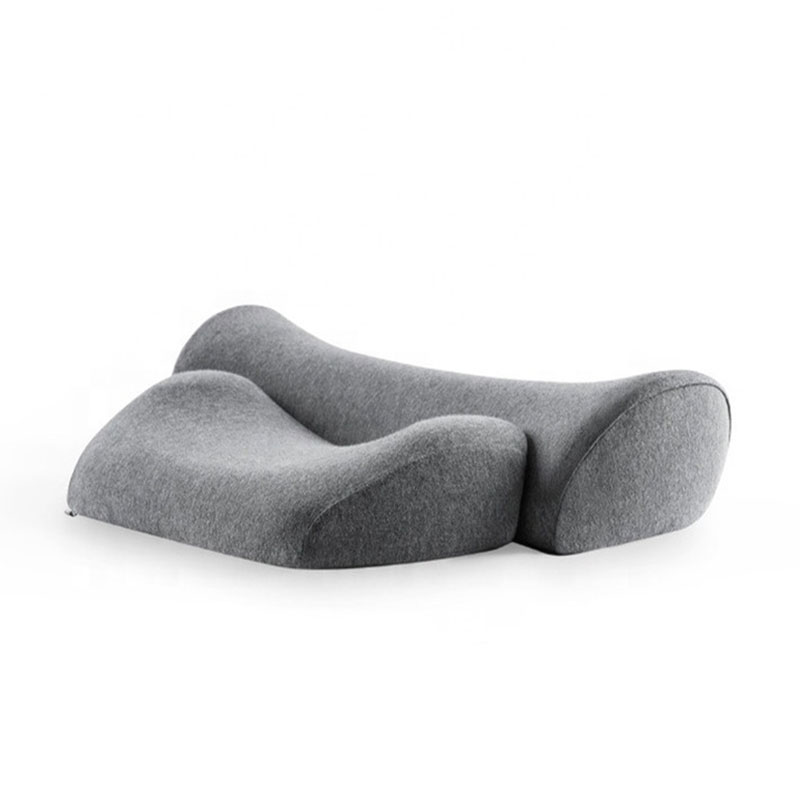
Cushions for an Office Chair are often designed flatter or with a large-area arc to allow the user more freedom to turn or reach for items. Professional automotive Lumbar Support, however, frequently utilizes a Butterfly Shape or raised side wings. This lateral wrap effectively "locks" the driver's lumbar spine, preventing lateral swaying during turns and reducing shear forces on the vertebrae. This Lateral Support is a function commonly missing in office chair cushions.
Maintenance and Environmental Safety
The interior of a car is a closed environment subject to extreme temperatures. Under direct sunlight, temperatures can exceed 60°C. Standard memory foam may soften excessively in high heat. Furthermore, professional automotive cushions often incorporate Cooling Gel and use materials that meet specific safety certifications to ensure they remain functional and stable within the Driving Ergonomics framework without becoming a safety hazard.
 previous post