 English
 عربى
عربىWhy Is a Memory Foam Lumbar Cushion the Secret to Ending Your Chronic Back Pain
Modern Sedentary Crisis: The Solution of Memory Foam Lumbar Cushion
In today’s digital work environment, the human body faces unprecedented challenges. According to biomechanical research, when in a sitting position, the lumbar spine bears approximately 40% more pressure than when standing. If one habitually leans forward or slumps, this pressure can surge by over 100%. This chronic compression is a primary culprit behind chronic back pain, herniated discs, and muscle strain.
Against this backdrop, the Memory Foam Lumbar Cushion has emerged as a revolutionary product in the field of ergonomic health. It is not merely a pillow but a precision tool designed for pressure management.
What is a Memory Foam Lumbar Cushion?
The core of a Memory Foam Lumbar Cushion lies in its material: viscoelastic polyurethane foam, commonly known as memory foam. This material was originally developed by NASA to relieve the immense G-force experienced by astronauts during liftoff.
Its unique physical properties include:
- Temperature Sensitivity: This material responds to body heat. Upon contact, it softens as the temperature rises, allowing it to contour precisely to the user's lumbar curve.
- Low Resilience: Unlike traditional sponge or latex, a Memory Foam Lumbar Cushion does not immediately push back like a spring. Instead, it slowly absorbs pressure and distributes it evenly.
Core Functional Overview
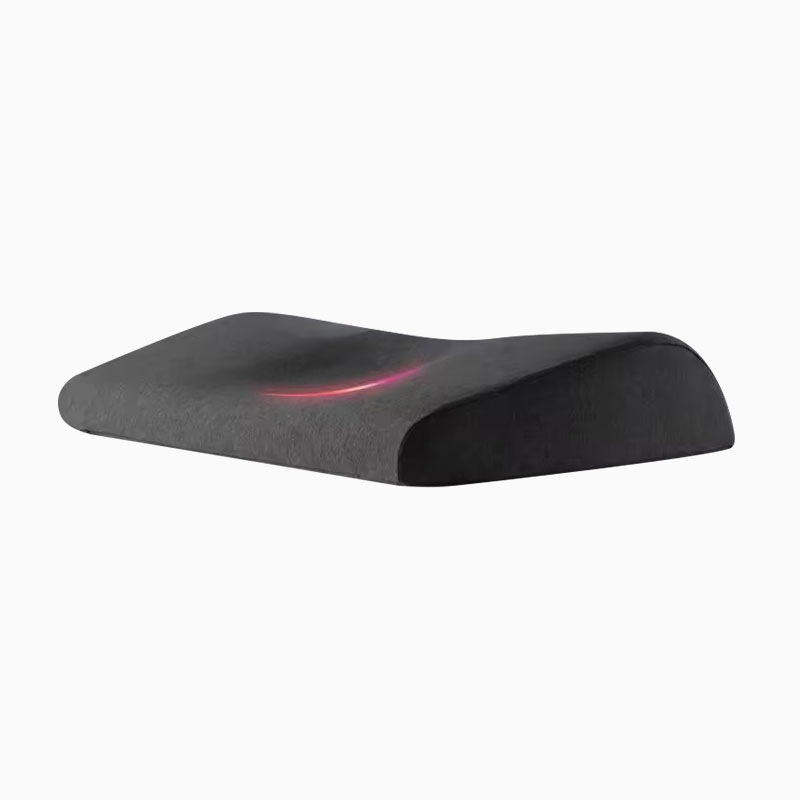
A high-quality Memory Foam Lumbar Cushion must be capable of filling the gap in the natural physiological curvature of the lumbar spine. A healthy spine has a natural inward curve called lordosis. In most office chairs lacking proper support, this area remains suspended, forcing the surrounding muscles to contract constantly to maintain balance. By introducing a Memory Foam Lumbar Cushion, users achieve the following:
1. Physical Filling: It occupies the void between the chair back and the lower back, allowing muscles to enter a relaxed state.
2. Pressure Redistribution: It shifts pressure away from the tailbone and lower lumbar vertebrae, spreading it across the entire mid-back support surface.
3. Posture Induction: Its thickness and shape naturally induce the chest to open upward, reducing the occurrence of kyphosis (slouching).
In-Depth Exploration: The Science of Memory Foam Lumbar Cushion
To understand why a Memory Foam Lumbar Cushion is superior to ordinary cushions, we must analyze it through the lens of material mechanics and ergonomics.
Molecular Power of Viscoelastic Materials
Memory foam acts as a solid with non-Newtonian fluid properties. When pressure is applied to a Memory Foam Lumbar Cushion, the internal cell structure collapses and vents air, allowing molecular chains to rearrange to accommodate the external force.
In physics, the superiority of this support can be explained by the pressure distribution formula: P = F / A. In this context, P represents the unit pressure felt by the back, F is the force of the body against the chair, and A is the contact surface area. While fiber cushions have low contact areas (A) and high pressure points (P), a Memory Foam Lumbar Cushion maximizes A through immersive contouring, thereby minimizing P.
Core Parameter Comparison: Memory Foam vs. Ordinary Foam vs. Latex
| Performance Metric | Memory Foam | Ordinary Foam | Latex |
| Pressure Absorption | 90% - 98% (Extreme) | 20% - 30% (Very Low) | 50% - 60% (Medium) |
| Rebound Speed | 3 - 10 Seconds (Slow) | < 0.5 Seconds (Instant) | < 1 Second (High Elasticity) |
| Contouring Ability | 100% Dynamic Fit | 50% Physical Contact | 70% Partial Fit |
| Lifespan | 3 - 5 Years | 6 - 12 Months | 5 - 10 Years |
| Support Feel | Immersive, No Pressure | Easy to Bottom Out | Bouncy, Pushing Upward |
Ergonomic S-Curve Support
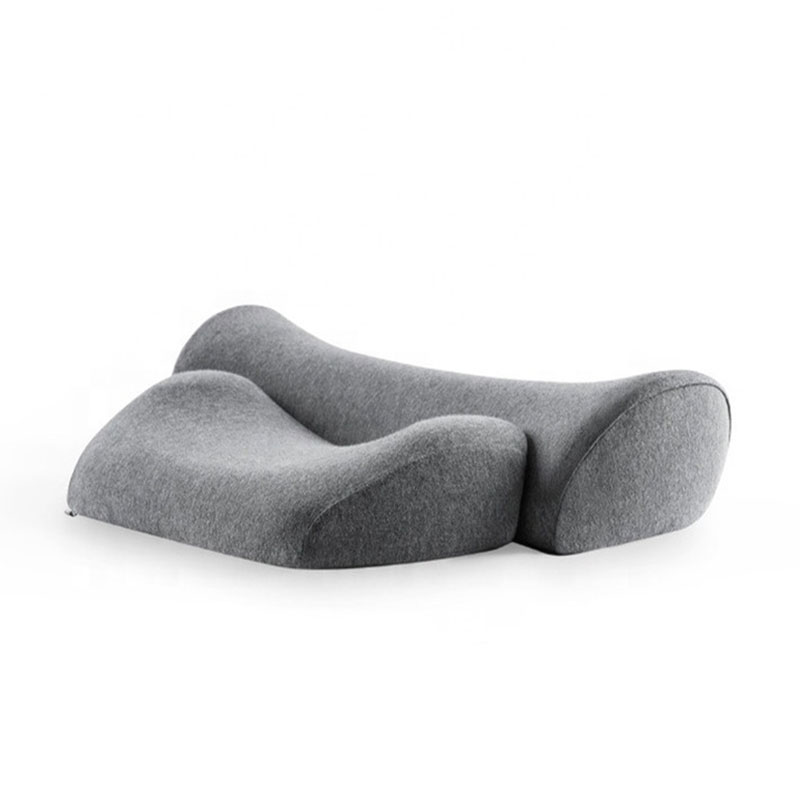
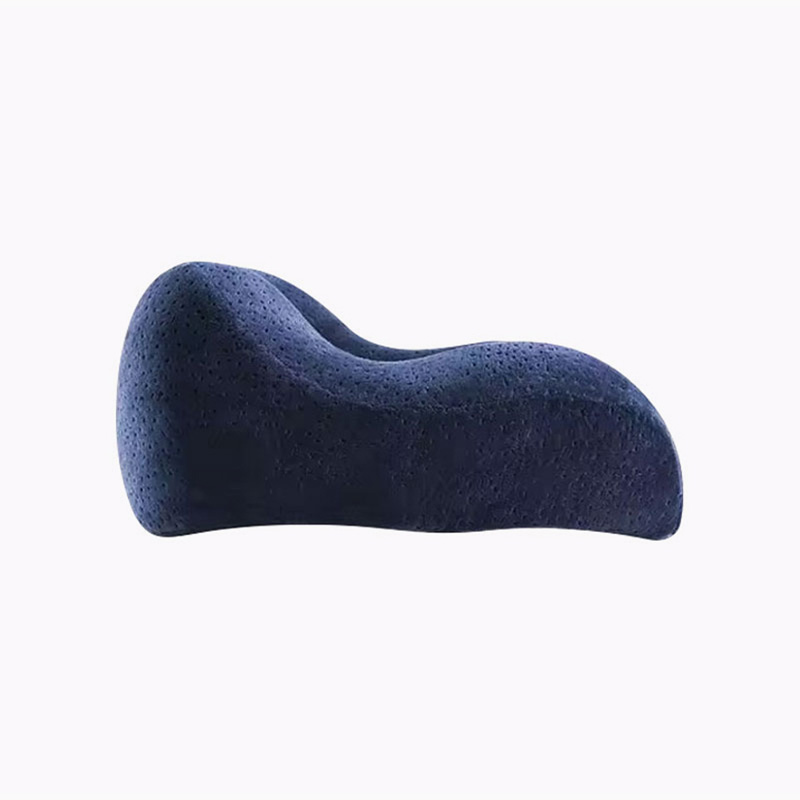
The human lumbar spine consists of five vertebrae (L1-L5). The profile of a Memory Foam Lumbar Cushion is typically designed with a thicker bottom, thinner top or a contoured center with winged sides structure. This shape ensures:
- Lateral Stability: The winged sides prevent the torso from tilting when fatigued.
- Intervertebral Decompression: By providing a slight upward lift, it increases the space between vertebrae, relieving nerve compression.
Core Benefits: Why Everyone Needs a Memory Foam Lumbar Cushion
Lumbar support is often misunderstood as a luxury for comfort, but a Memory Foam Lumbar Cushion is an active intervention tool for spinal health.
Relief of Chronic Pain and Muscle Fatigue
In an unsupported seat, back muscles must remain in isometric contraction to prevent spinal collapse. The Memory Foam Lumbar Cushion takes over this mechanical load.
- Decompression Effect: Research indicates that a properly placed cushion can reduce intradiscal pressure by approximately 25% - 30%.
- Elimination of Pressure Points: Its viscoelastic nature eliminates pain caused by contact between bony protrusions and hard chair surfaces.
Correcting Sitting Habits and Spinal Alignment
The common C-shaped sitting posture causes the natural lumbar curve to disappear. A Memory Foam Lumbar Cushion creates a postural reminder effect:
- Maintaining Lordosis: It encourages the pelvis to stay in a neutral position, preventing posterior pelvic tilt.
- Kinetic Chain Improvement: When the lower back is supported, stress on the neck and shoulders is reduced, alleviating tension headaches.
Improving Circulation and Respiratory Efficiency
Compressed postures restrict the diaphragm and squeeze the abdominal cavity. A Memory Foam Lumbar Cushion opens the chest:
- Oxygen Level Boost: Deeper breathing helps maintain focus during long hours of work.
- Preventing Lower Limb Numbness: It reduces pressure on the lumbosacral nerves, preventing the pins and needles sensation in the legs.
Buyer’s Guide: Choosing a High-Quality Memory Foam Lumbar Cushion
Understanding core technical parameters is essential for selecting a professional-grade Memory Foam Lumbar Cushion.
Density: The Soul of Durability and Support
Density determines whether a cushion will still provide support after eight hours of continuous pressure.
| Density Grade | Range (lb/ft³ or kg/m³) | Support Performance | Best Use Case |
| Low Density | < 3 lb/ft³ (< 48 kg/m³) | Very soft, bottoms out quickly | Casual use, not for office |
| Medium Density | 3 - 5 lb/ft³ (48-80 kg/m³) | Balanced fit and support | Daily office, commuting |
| High Density | > 5 lb/ft³ (> 80 kg/m³) | Firm support, long life | Post-surgery, heavy weight |
Indentation Load Deflection (ILD)
ILD measures the force required to compress the foam by 25%. For a Memory Foam Lumbar Cushion, an ideal ILD is typically between 10 - 15 lb. This ensures that even after softening with heat, the cushion retains a supportive core.
Critical Detail Checklist
1. Cover Weight and Weave: Look for fabrics over 250gsm or 3D mesh. Breathability should exceed 50mm/s to prevent sweating.
2. Strap System: High-quality products use dual adjustable straps to prevent sliding. Buckles should withstand at least 20kg of tension.
3. Inner Protector: Professional cushions include an inner cover to protect the foam from sweat and degradation.
Targeted Application Analysis for Different Groups
The Memory Foam Lumbar Cushion is designed to adapt to various spinal pressure profiles.
Office Professionals and Remote Workers
For those sitting over 8 hours a day, the lumbar spine faces a continuous static load. A density of 4 - 5 lb/ft³ is recommended to provide damping without making the muscles inactive. Use a dual-strap system to ensure it stays aligned with the L3-L4 vertebrae even as you move.
Drivers and Commuters
Driving environments involve high-frequency micro-vibrations that accelerate disc fatigue. Car seats are often deeply bucketed, so a thicker Memory Foam Lumbar Cushion (10cm - 12cm) is needed to offset seat depth. The foam must be high-quality to remain stable across temperature fluctuations in a car.
Pregnancy
As the center of gravity shifts forward, it causes hyperlordosis and severe lower back pain. A winged butterfly design provides lateral support to the back muscles. Ensure the product is CertiPUR-US certified to be free of harmful VOCs.
Students
Young spines are still developing. A Memory Foam Lumbar Cushion helps build the habit of sitting upright through physical intervention, providing more consistent results than verbal reminders alone.
Maintenance and Care: Extending the Life of Your Cushion
Cleaning Taboos
| Action | Allowed? | Reason |
| Washing Core | Strictly Forbidden | Water trapped in cells causes mold and breaks polymer chains. |
| Sun Exposure | Not Recommended | UV rays oxidize the foam, making it brittle and yellow. |
| Washing Cover | Allowed | Monthly washing in water below 30°C is recommended. |
| Vacuuming | Allowed | Use low suction to remove dust from the foam core. |
Performance Recovery Tips
- Odor Removal: For new product smells, sprinkle baking soda on the foam, let it sit for 2 hours, vacuum, and air out for 24 hours in a cool place.
- Softening in Cold: If the cushion is too hard in winter, let it reach room temperature (above 20°C) before use to activate its viscoelastic properties.
FAQ: Common Questions and Science
Q1: Why is my cushion harder in the winter than the summer?
This is due to the Glass Transition Temperature of memory foam. At low temperatures, molecular activity slows down, putting the material in a glassy state. Body heat shifts it into a rubbery state, which is what allows the Memory Foam Lumbar Cushion to provide a custom fit.
Q2: Will it feel hot against my back?
Traditional closed-cell foam can trap heat. Modern high-performance Memory Foam Lumbar Cushions use Open-Cell structures for airflow or Gel-Infused foam to absorb and dissipate heat.
Q3: Where exactly should I place the cushion?
The most prominent part of the cushion should align with the deepest part of your spinal curve, usually 2-3 finger widths above your belt line.
Q4: How long does a quality cushion last?
With 8 hours of daily use, a high-density cushion (above 4lb/ft³) typically maintains effective support for 3 - 5 years. If it fails to rebound within 10 seconds, it is time for a replacement.
Q5: Why is it called Memory foam?
Because it leaves a temporary imprint after pressure is removed, remembering your shape. This slow rebound eliminates immediate counter-pressure, providing a weightless sensation.
 previous post