 English
 عربى
عربىAre Memory Foam Pillows Actually Good for You? Pros, Cons, and Sleep Science
A buyer once told us that her chronic neck pain faded within two weeks of switching to a memory foam pillow, while her husband tried the same model and returned it after a week. Both responses are legitimate. Memory foam is not a magic material, and it is not a dangerous one either. Whether it actually helps you depends on foam density, pillow height, sleeping position, and a few thermal and chemical factors that ordinary product descriptions rarely address.
Here is the short answer before the details: memory foam pillows are genuinely good for most sleepers because they distribute pressure and support the natural curve of the cervical spine. However, a poorly made or incorrectly sized pillow will not deliver any of those benefits, and certain sleeper types need specific foam characteristics to avoid pain instead of gaining relief.
This guide looks at the science behind the material, the real-world pros and cons, the quality markers that separate good foam from weak foam, and the practical choices that decide whether memory foam works for you. The perspective comes from years of manufacturing sleep products, not from marketing copy.
What Makes Memory Foam Different From Ordinary Pillow Filling
Memory foam, or viscoelastic polyurethane foam, was developed in the 1960s for aerospace seating, where the goal was to spread weight evenly over a surface and absorb impact. When you press it, the foam does not spring back immediately. It flows, deforms slowly, and recovers over several seconds. That slow recovery is what allows a pillow to hold a custom shape under your head for hours rather than pushing back against it like a spring.
The raw material starts as a combination of polyols and isocyanates mixed with catalysts, blowing agents, and surfactants. The mixture reacts inside a mould, forming open cells that give the foam its ability to compress and breathe. Two properties from this process matter most to you as a sleeper: density and resilience.
Density is measured in kilograms per cubic metre. A higher-density foam contains more material in the same volume, weighs more, and holds its shape far longer. Resilience, sometimes called rebound, is how quickly the surface returns to its original position after pressure is released. A typical memory foam pillow on the market has a density between 35 and 50 kg/m3; premium therapeutic versions go higher. When a positive review says that a memory foam pillow still supports correctly after three years of nightly use, density is the silent reason.
Modern memory foam has also moved beyond the original formula. Gel-infused foam is designed to reduce heat buildup, open-cell foam allows more air to circulate, and bio-based foam replaces part of the petroleum-derived ingredients. These versions address the two most common complaints against the material: sleeping warm and smelling of chemicals in the first few days.
Certifications matter at this level. Foam that carries CertiPUR-US or OEKO-TEX Standard 100 certification has been tested for volatile organic compounds, formaldehyde, heavy metals, and phthalates. If you are asking whether memory foam is actually good for you, the certifications on a pillow label are the closest thing to a safety guarantee that foam can have.
The Benefits That Make Memory Foam Worth Considering
Memory foam became popular worldwide because it solves problems that conventional pillows cannot. The benefits below are common, observable, and directly related to the material's physical behaviour.
1. It Supports the Natural Curve of Your Neck
Your cervical spine has a slight inward curve. When you lie on a pillow, the space between your head and the mattress can bend that curve into an unnatural angle. A memory foam pillow fills the gap because it moulds to the exact shape of your head and neck, holding the vertebrae in a neutral line instead of forcing the neck sideways or forward.
Side sleepers benefit the most. A side sleeper's head sits roughly 10 to 15 centimetres above the mattress, depending on shoulder width. A memory foam pillow with enough loft keeps the head at that height, keeping the ear, shoulder, and hip in a straight line. Back sleepers need a slightly lower loft, and stomach sleepers the lowest. When the fit is right, the neck and shoulder muscles can relax for the whole night.
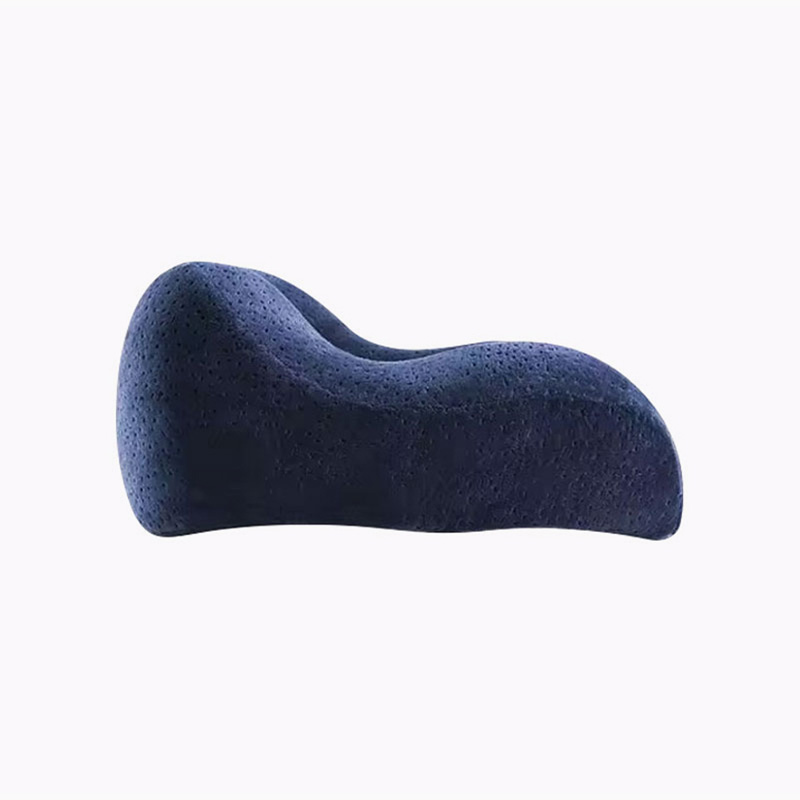
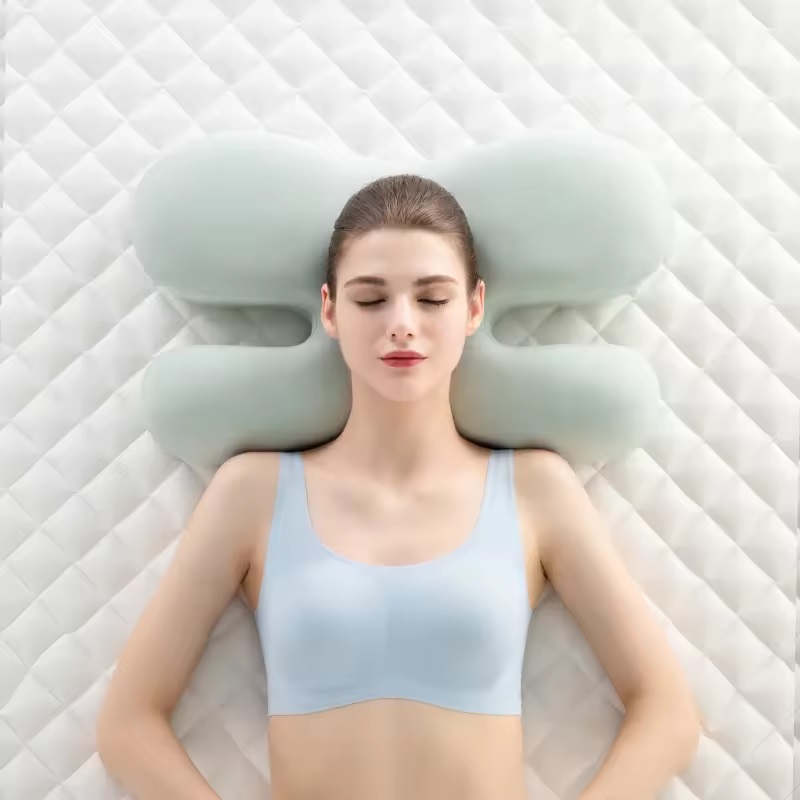 Bravo Side Sleeper Memory Foam Pillow with Anti-Wrinkle DesignThis H-shaped memory foam pillow offers three zones to support side, back, and stomach sleepers. Its bamboo charcoal foam absorbs odor and the breathable cover is removable, making it a practical choice for neck pain relief and skin-friendly comfort.View Product →
2. It Relieves Pressure Points Better Than Most Fillings
The weakness of an ordinary pillow appears most clearly on a pressure map. A feather pillow pushes back around the edges of the head while the centre sinks, concentrating force on a small area. A fibre pillow shifts or clumps. Memory foam distributes the weight of the head across the whole contact surface, which lowers the peak pressure under the skull and jaw.
For people who wake up with numbness, a headache, or a sore ear, pressure relief often removes the cause. The foam absorbs movement rather than bouncing it back, so you also turn over less during the night. If you want to understand the physics in more depth, the technical analysis of how a memory foam pillow achieves pressure relief walks through each stage of the mechanism.
3. It Is Naturally Hypoallergenic
The dense cell structure of memory foam leaves very little room for dust mites, mould spores, or other common allergens. Dust mites need moisture and organic food sources, both of which are scarce inside a block of polyurethane foam. That is why memory foam pillows are a reasonable choice for people with mild dust allergies or asthma, especially when the pillow includes a washable outer cover.
The condition is that moisture must be managed. Memory foam should never be soaked or left damp. A removable, washable cover plus occasional airing keeps the foam itself clean and dry, preserving its hypoallergenic advantage for years.
4. It Reduces Disturbance and Can Help With Snoring
A conventional pillow compresses and springs back with every head movement, transferring motion to the mattress and to your partner. Memory foam absorbs that motion almost completely. For couples sharing a bed, this means fewer interruptions from tossing and turning.
Snoring is a different matter. Snoring often gets louder when the head tilts and the airway narrows. A pillow that keeps the head and neck in a neutral posture can reduce the collapse of soft tissue in the airway. Positional therapy for mild sleep-disordered breathing regularly uses wedge or contoured pillows to maintain a lateral sleep position, and memory foam's ability to hold that position for hours is the practical advantage.
The Downsides Nobody Mentions in the Reviews
No pillow material is perfect, and memory foam has real trade-offs. The good news is that each drawback has a clear countermeasure once you know what to look for.
If you sleep warm
Gel-infused or open-cell foam moves heat away far better than classic memory foam. Avoid relying only on a cover.
If you are sensitive to smells
Choose certified low-VOC foam. Airing the pillow for two to three days removes most of the initial odor.
If this is your first memory foam pillow
Give yourself seven to fourteen days to adapt. Early firmness usually disappears as the foam softens with body heat.
If you want the pillow to last
Stay above 35 kg/m3 density. Below that level, comfort fades quickly as the cell structure collapses.
1. It Sleeps Warmer Than Feather or Latex
The original memory foam formula was, frankly, hot. Because the foam deforms slowly and has a dense cell structure, body heat becomes trapped in the contact area. Surface temperature measurements show that classic memory foam under a resting head runs between one and two degrees warmer than the surrounding mattress surface after an hour or two. That does not sound dramatic, but for a hot sleeper it is the difference between a calm night and a sweaty one.
The solution is in the construction. Gel-infused memory foam mixes cooling beads into the material so that heat is absorbed and moved away. Open-cell foam lets air circulate through the structure, and perforated or channel-cut layers increase airflow further. A breathable cover made from bamboo, cotton, or 3D mesh pulls heat from the skin. The practical rule is simple: if you sleep warm, choose a pillow that explicitly states gel infusion, open-cell construction, or perforated channels, and do not trust a cover alone to do the cooling work.
2. Off-Gassing Is a Real Phenomenon
The chemical reaction that turns liquid polyurethane into solid foam releases byproducts. When a block of foam leaves the mould, a small amount of those compounds remains inside the cells. The first time you open a sealed memory foam pillow, the smell is noticeable. The foam industry calls this off-gassing, and in most cases the odor fades within 24 to 72 hours if the pillow is left in a well-ventilated room.
The safety question has been studied thoroughly. Foam certified under CertiPUR-US or OEKO-TEX Standard 100 is tested for volatile organic compound emissions and must meet strict thresholds. Uncertified foam, especially from unknown production conditions, is where the risk concentrates. Buy from a manufacturer that can name the certification, and off-gassing becomes a comfort issue rather than a health issue.
3. It Feels Firmer at First Than You Expected
Memory foam's slow response can feel like firmness, especially in the first week. A new pillow resists your hand before gradually yielding. Sleepers coming from a soft feather or fibre pillow often describe the feeling as too hard. In most cases, the firmness is the support doing its job: the cervical spine needs a certain amount of resistance to stay aligned. Most people adapt within three to ten nights. If a pillow still feels genuinely hard after two weeks even in a warm room, it is probably the wrong firmness grade for you.
4. Cheap Foam Loses Support Over Time
Low-density memory foam, meaning foam below roughly 30 kg/m3, breaks down under repeated pressure. The walls of the cells collapse and cannot push back, leaving a permanent valley in the middle of the pillow. The real lifespan of a memory foam pillow is tied directly to density. A quality pillow in the 40 to 50 kg/m3 range keeps its shape for three to five years with daily use, while a bargain pillow can flatten within six months. Many negative reviews that blame memory foam for being undurable are actually reviews of the cheapest foam on the shelf.
Is a Memory Foam Pillow Good for Your Sleeping Position?
The answer to the title question changes with your sleeping position. There is no universal pillow height. A tall, broad-shouldered side sleeper and a petite stomach sleeper need completely different pillows, and no single model can serve both well.
The table below gives a general starting point. The principle is that the loft of the pillow should fill the distance between your ear and the outer edge of your shoulder when you lie on your side, or between your forehead and chest when you lie on your back.
| Sleeping position | Recommended loft | Ideal firmness | Why it works |
|---|---|---|---|
| Side sleeper | 10-14 cm | Medium-firm | Keeps the ear, shoulder, and hip in a straight line while filling the gap under the head |
| Back sleeper | 8-12 cm | Medium | Follows the cervical curve without tilting the head forward |
| Stomach sleeper | 5-8 cm | Soft to medium | Limits neck extension and reduces pressure on the lower back |
| Combination sleeper | 10-13 cm | Medium with contoured shape | Supports both side and back positions during overnight turns |
A quick rule: when you lie on your side, your nose should point straight ahead and your neck should feel parallel to the mattress. If you feel the neck bending upward, the pillow is too high; if your head sinks toward the shoulder, the pillow is too low.
For side sleepers, a contoured pillow with a higher edge and a deeper centre supports the cervical spine better than a flat rectangle. This is where a fit-tested cervical pillow earns its place, especially when you already wake up with shoulder or neck stiffness.
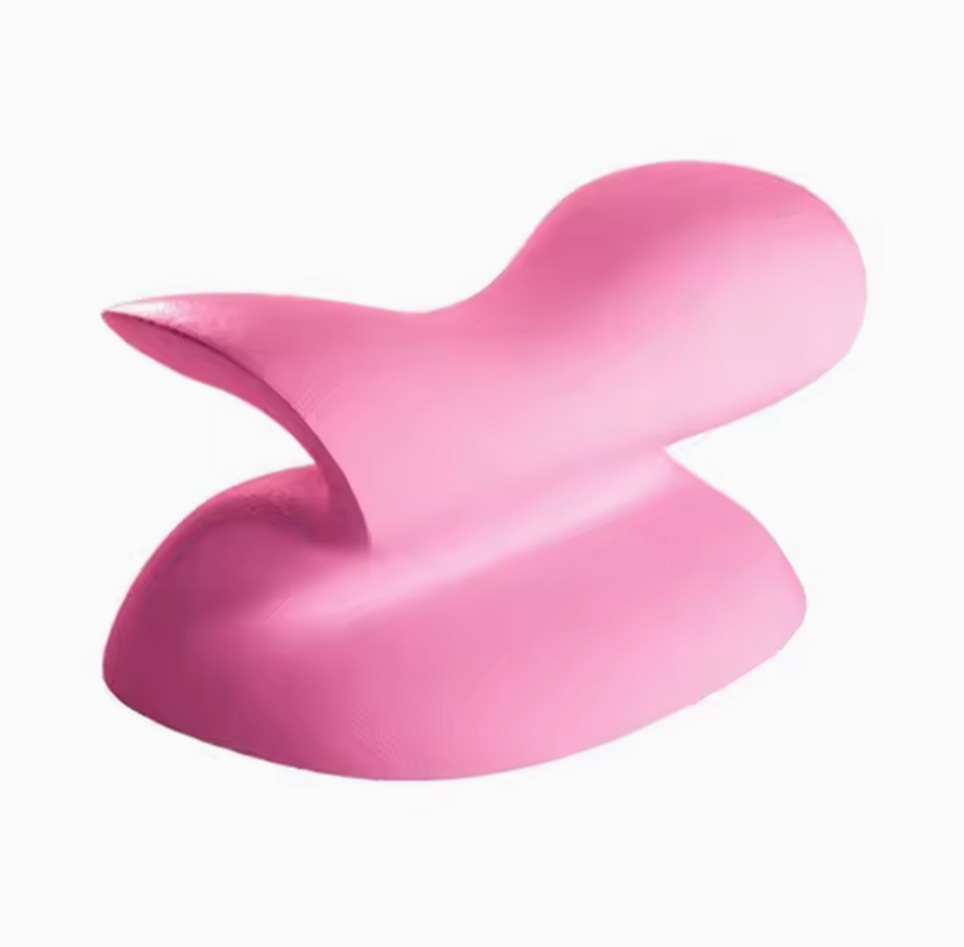
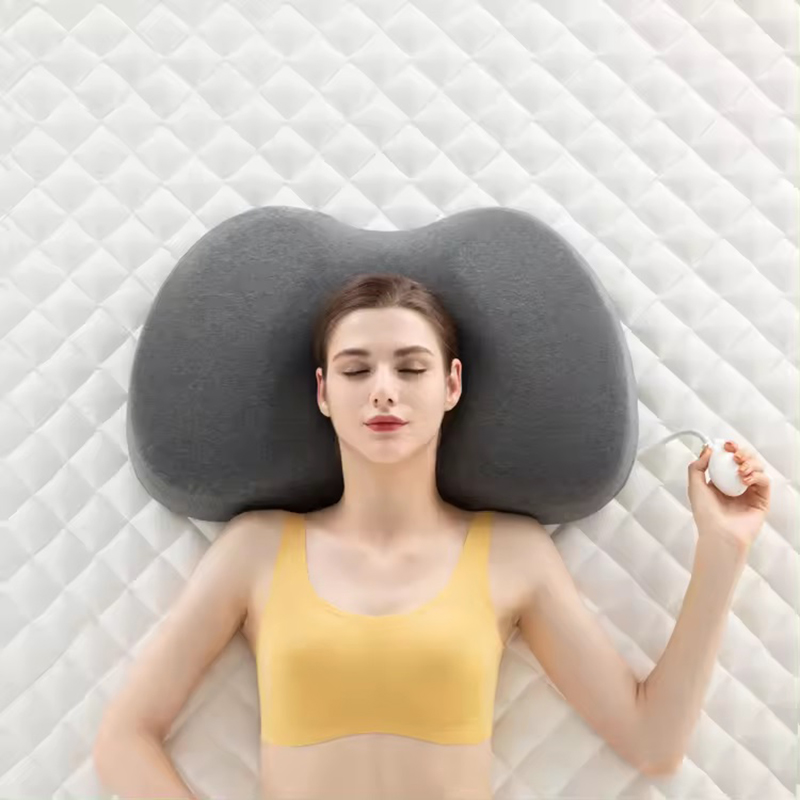 Cervical Support Orthopedic Pillow with Contoured 3D PartitionDesigned to maintain the neck's natural C-shaped curve, this contoured pillow suits multiple sleeping positions. The removable, washable cover keeps it hygienic, while the shape helps relax neck muscles and ease stiffness for those waking with shoulder or neck pain.View Product →
A cervical memory foam pillow is not the same as a standard rectangular model. The elevated sides support the neck curve, the central depression cradles the head, and the height is matched to the foam density so that it does not bottom out under the weight of the head. If neck pain has already appeared, this shape difference often matters more than the material itself.
Memory Foam vs Latex vs Feather vs Polyester: A Side-by-Side Look
To judge whether memory foam is genuinely good for you, it helps to compare it with the alternatives you might buy instead. Each filling has a different trade-off profile, and what looks like an advantage in one criterion can be a disadvantage in another.
| Filling | Support type | Pressure relief | Cooling | Durability | Maintenance |
|---|---|---|---|---|---|
| Memory foam | Slow-rebound contouring | Excellent | Moderate on classic foam; improved by gel or open-cell design | 3-5 years with quality density | Spot clean; washable cover |
| Latex | Elastic and springy | Very good | Good | 4-7 years | Spot clean; washable cover |
| Feather or down | Soft and diffuse | Low to medium | Good | 2-4 years with regular fluffing | Dry cleaning recommended |
| Polyester fibre | Loose and soft | Low | Good | 1-2 years | Usually machine washable |
| Buckwheat hull | Firm and moldable | High contact focus | Excellent | 5-10 years | Air the hulls; wash the case occasionally |
Memory foam's advantages are contouring and pressure distribution. Latex returns more bounce and breathes better but has a rubbery push that some sleepers dislike. Feather is soft and inviting but offers little cervical support and needs constant reshaping. Buckwheat stays cool and lasts long but feels hard and makes noise when you move. For anyone whose main sleep complaint is neck pain, shoulder pain, or waking up with a heavy head, contouring and pressure relief usually beat every other criterion.
That is not a universal recommendation. If you sleep only on your stomach and dislike the feeling of resistance, a soft fibre or feather pillow may genuinely suit your neck better. The material that helps you is the one that fits your body shape and sleeping habits, not the one with the most persuasive advertising line.
What Quality Looks Like When You Make Memory Foam Yourself
People often ask what quality memory foam actually means on a specification sheet. Because our factory manufactures memory foam pillows for consumers worldwide, the answer is easier to see from inside the mould than from any product page.
The first number to check is density. Density tells you how much foam material occupies one cubic metre. In our production line, standard consumer pillows use 38 to 45 kg/m3, and premium therapeutic models reach 50 kg/m3 or above. When density falls below 30 kg/m3, the pillow feels light and soft in the store but loses its support within weeks. Density never appears in a product photo, which is exactly why so many low-price pillows rely on that visual blind spot.
The second number is ILD, or Indentation Load Deflection, which measures surface firmness. A low ILD of around 12 means very soft, while a value near 30 means firm. A well-designed pillow does not aim for maximum firmness. It aims for a combination of density and ILD that supports the neck without creating a hard pressure point. This is where the common question of density versus hardness becomes practical: two pillows with the same ILD can feel completely different when their densities differ. Our comparison of density and hardness in memory foam pillows explains this relationship with actual production test examples.
The other thing we check on every batch is the shape of the mould. A pillow that will support a head for seven to eight hours needs smooth curves, no sharp transitions, and a contour height matched to the foam density. In the factory, we test each batch for compression recovery, measure the rebound time, and perform a residual height check after repeated pressure cycles. A pillow that returns to about 98 to 99 percent of its original height after compression passes. One that stays visibly lower goes back to the formulation stage.
Certification is also part of the purchasing decision rather than an afterthought. The foam used in the pillows we sell is tested before it goes into the mould, not after it is packed. That is the difference between a certificate printed on a label and a certificate that reflects what is actually inside the pillow.
For the end user, the practical translation is simple: ask for the density number. A brand that answers with a figure in kilograms per cubic metre is telling you something measurable. A brand that says high density or premium foam without a number is telling you nothing.
How to Choose a Memory Foam Pillow That Is Actually Good for You
Use the checklist below to filter out most weak options before you even compare reviews. The checklist reflects the same priorities we use when designing pillows for our own customers.
- Set your sleeping position first. Determine a rough loft target using the table in the previous section before you look at any brand.
- Check the density number. Look for at least 35 kg/m3 for an everyday pillow, and 45 kg/m3 or more if you want it to hold its shape beyond three years.
- Match firmness to your body weight. Heavier sleepers need a higher ILD; lighter sleepers need softer foam to avoid pressure under the jaw.
- Choose a contour when neck pain is your priority. A cervical pillow with a central recess and elevated edges supports the neck curve in both side and back positions.
- Add a cooling layer only if you sleep warm. Gel infusion, open-cell construction, or perforated channels matter; a cooling cover alone is not enough.
- Check the cover carefully. A removable, machine-washable cotton or bamboo cover keeps the pillow clean and extends its life.
- Verify certification. CertiPUR-US, OEKO-TEX Standard 100, or an equivalent low-VOC label provides a basic level of chemical safety.
- Give the pillow a fair trial. The first night tells you how it feels; adaptation takes seven to fourteen days. If pain appears or remains after two weeks, return it.
When we design a pillow in our own line, the same list guides every decision about foam grade, cover fabric, and contour height. Our orthopedic pillow family came from customers who arrived after a failed experience with a soft, shapeless pillow that solved nothing.
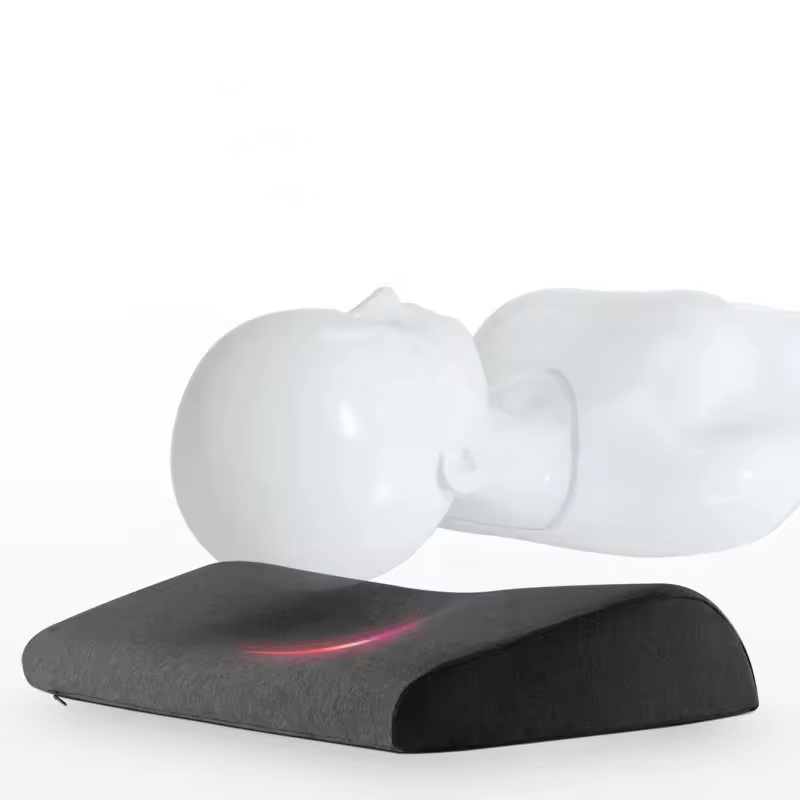 Bravo Patented Memory Foam Orthopedic Pillow for Side SleepersThis patented contoured pillow features a central hole to align the neck and spine, reducing strain. The slow-rebound memory foam core conforms to your head and neck, while the antibacterial bamboo charcoal fabric and breathable inner cover help keep the pillow cool and clean.View Product →
When two pillows look similar, the differences that decide the result are small but clear: how the front edge meets your neck, whether the shoulder cut-outs align with your body width, and whether the cover stays cool and quiet while you move. Those are details you can feel on the first night, and they matter far more than the color options.
How to Care for a Memory Foam Pillow
Memory foam is durable, but it is not low-maintenance in the way fibre pillows are. You cannot put a memory foam core in a washing machine. The three rules are protect, spot clean, and air.
Use the removable cover and wash it every one to two weeks on a gentle cycle. The foam core itself should only be spot cleaned with mild soap and cold water, then dried thoroughly in a ventilated space. Our step-by-step cleaning guide for memory foam pillows gives the exact method for every common stain type.
Moisture is the enemy. A damp pillow placed back on the bed can trap water inside the cells, encouraging mould and breaking down the foam structure. Air the pillow every few weeks in a dry, shaded place to refresh it and restore a little loft. Never use a tumble dryer or direct sunlight on memory foam; high heat permanently damages the cell walls.
A reasonable replacement schedule for daily use is every two to three years. Replace the pillow earlier if a permanent indentation forms, if the surface feels flat, or if it no longer keeps your neck aligned through the night. Waking up with pain that the same pillow used to prevent is a more reliable signal than any date written in the manual.
Frequently Asked Questions
These are the questions buyers ask most often, both in the reviews we receive and in technical support conversations.
Are memory foam pillows good for neck pain?
Yes, when the density, loft, and contour match your body shape. Neck pain is usually a support and alignment problem, and memory foam addresses both more consistently than soft fibre or feather fillings. A contoured cervical pillow works best for persistent stiffness. The caveat is that a pillow that is too high or too firm can make the pain worse, so sizing matters more than the brand.
Do memory foam pillows sleep hot?
Classic memory foam retains more heat than latex or feather. Modern versions with open-cell structure, gel infusion, or perforated channels run considerably cooler. The cover plays a large role too; a breathable cotton or bamboo cover is preferable to synthetic fabrics that trap heat.
How long do memory foam pillows actually last?
A quality pillow with a density of at least 40 kg/m3 typically lasts three to five years under nightly use. Economy pillows at 25 to 30 kg/m3 may collapse in six to twelve months. The odor, initial firmness, and support all fade when the foam structure breaks down.
Is it safe to sleep on a memory foam pillow every night?
Yes. Memory foam is used daily by millions of people, and when the foam is certified low-VOC and the pillow is correctly sized, there are no known long-term health risks. The practical test is simple: if you wake up without pain and without skin irritation, the pillow is safe for your situation.
Why does a new memory foam pillow smell?
The smell comes from volatile organic compounds that remain in the foam after production. Airing the pillow in a ventilated room for 24 to 72 hours removes most of the odor. Certified foams release far fewer VOCs than uncertified foam, which is why the certification matters.
What is the best density for a memory foam pillow?
Most sleepers do best with a density between 35 and 45 kg/m3. Above 50 kg/m3 the pillow is very durable but can feel heavy and hard under the neck. Below 30 kg/m3 the pillow is soft at first but loses support quickly and is not worth the lower price.
Can I wash a memory foam pillow in the washing machine?
No. The foam core absorbs water and collapses when machine washed or dried. Wash the removable cover regularly and spot clean the core with mild soap and cold water, then air dry it fully before putting the cover back on.
The Final Verdict
Are memory foam pillows actually good for you? The answer is yes when three conditions are met: the foam density is high enough to provide lasting support, the pillow height matches your sleeping position, and the foam carries a verifiable low-emission certification. Under those conditions, memory foam gives you consistent neck support, pressure distribution, and durability that few other fillings can reproduce.
The cases where memory foam disappoints are oddly consistent: uncertified cheap foam with a strong smell, density so low that the pillow flattens within months, or a loft chosen by fashion rather than by body shape. Those failures are not arguments against memory foam. They are arguments against buying a pillow without checking its specification.
Start from your own sleeping position. Define the loft you need, check the density and the certification, and give yourself two full weeks to adapt. That process will answer the question far better than any review, because it ends with your own neck giving the verdict.
 previous post