 English
 عربى
عربىWhat Is a Lumbar Cushion Used For? | Uses & Benefits Guide
You sit down after lunch, and within an hour the familiar ache appears just above your waistband. If that sounds like your workday, you have probably wondered whether a lumbar cushion would help. The answer starts with what a lumbar cushion is used for, how it works, and whether it solves the problem you face.
A lumbar cushion is a compact support pad that fills the gap between your lower back and the backrest of a chair, car seat, or sofa. Its job is to keep the lumbar spine neutral so the muscles around it are not constantly fighting gravity. The six uses below cover the full picture.
What Exactly Is a Lumbar Cushion?
A lumbar cushion is placed behind the lower spine, at beltline level. The lumbar spine curves inward naturally, a shape called lordosis, but most chair backrests are too flat to preserve that curve. When the lower back rounds backward, muscles and discs take the strain. A lumbar cushion restores the curve by filling the gap between the spine and the seat back.
Unlike a generic pillow, a lumbar cushion is shaped for one job: supporting the lumbar region under sustained pressure. The best versions use viscoelastic memory foam, which softens with body heat and molds to your contour. That is why a memory foam lumbar cushion is the default choice for long hours of sitting. It spreads the load instead of pushing at a single point.
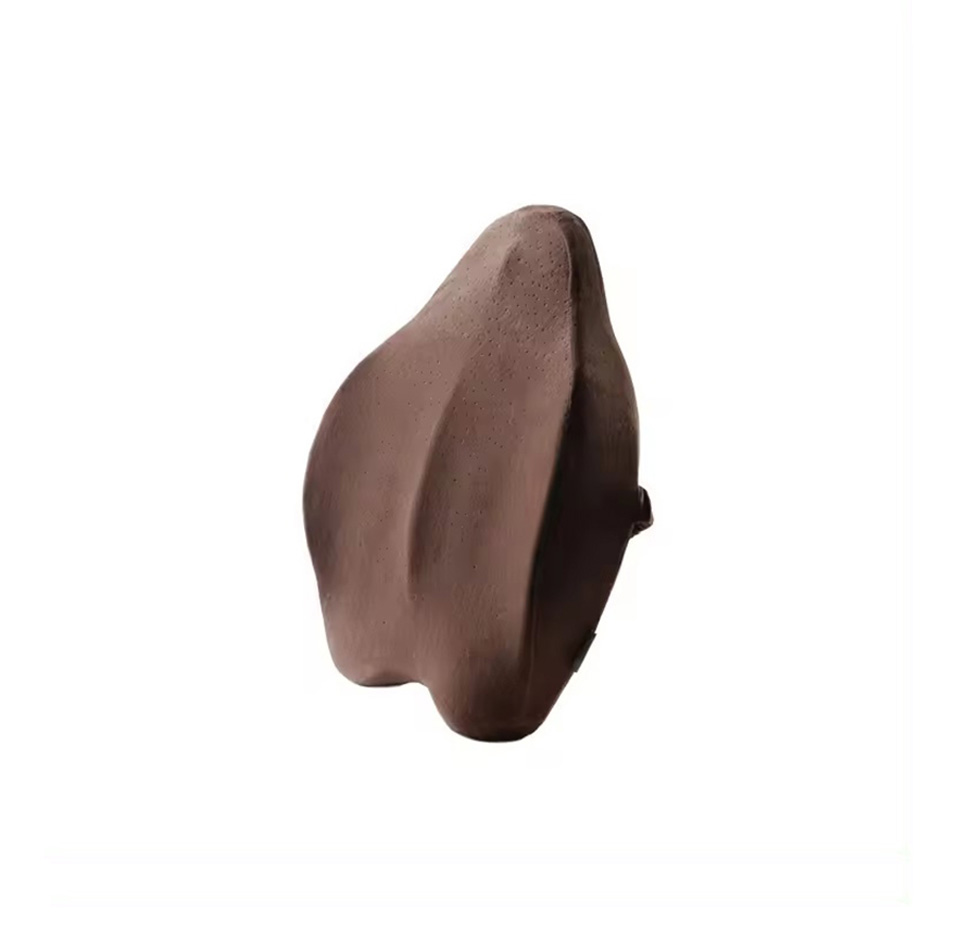
 Wholesale Bravo Memory Foam Thicken Lower Back Pain Relief Waist Support Lumbar Nantong Bulawo Home Textile Co,. Ltd. is China wholesale Bravo Memory Foam Thicken Lower Back Pain Relief Waist Support Lumbar Cushion su...View Product →
Where should it sit? Place it vertically so the highest point of the contour meets the inward curve of your spine, just above the pelvis. If the chair suddenly feels supportive from behind, the position is right.
Lumbar Cushion vs. Regular Pillow
Could you use a bed pillow instead? Not really. A bed pillow is soft and full, designed for head and neck support. Under your body weight it flattens unevenly, slides around, and offers no consistent resistance at the point you need it. A lumbar cushion is engineered differently: the contoured shape mirrors the inward curve of the lower spine, and the density provides steady resistance. A flat pillow cannot reproduce that geometry, which is why it fails to keep the pelvis from tilting backward.
What Is a Lumbar Cushion Used For? 6 Primary Uses
Here are the six main jobs a lumbar cushion performs, and the mechanics behind each one.
- Maintains the natural curve of the lower spine. Gravity and weak core muscles pull the lower back into a rounded slouch during sitting. A lumbar cushion blocks that by filling the space behind the curve, so the spine keeps its natural S shape without constant muscle effort.
- Reduces fatigue from prolonged sitting. Sitting places continuous strain on spinal ligaments and back muscles. By acting as a backstop, the cushion lets those muscles relax instead of firing all day. Less strain translates into less end-of-day fatigue.
- Improves posture and alignment. Lumbar support works from the bottom up. When the pelvis stays neutral, the spine stacks above it naturally, reducing the urge to hunch the shoulders or push the chin forward.
- Assists with lower back discomfort. Studies of lumbar support cushions report positive effects on posture and comfort during prolonged sitting tasks. A cushion is not a cure, but it is a useful part of a daily routine alongside movement breaks and stretching.
- Reduces pressure on spinal discs. Sitting loads the lumbar discs more than standing, and a rounded spine makes that load uneven. A lumbar cushion distributes the pressure more evenly, reducing the concentrated stress that leads to stiffness.
- Supports recovery and special conditions. Pregnant women, people recovering from injuries, and those with sciatica often find a neutral sitting position reduces aggravation. Use it as an aid, not a treatment, with professional guidance when a condition is involved.
Who Should Use a Lumbar Cushion?
A lumbar cushion is not only for people with diagnosed back problems. It earns its keep in a few specific situations.
- Office and remote workers who sit for six hours or more a day on chairs with flat or thin backrests.
- Long-distance drivers and commuters, because a car seat's reclined angle opens a deeper gap behind the lower back.
- Pregnant women, whose shifting center of gravity increases the load on the lumbar region.
- People recovering from injuries or managing chronic lower back pain, under the supervision of a physician or physical therapist.
- Older adults who want comfortable posture while reading, eating, or watching television in a chair or recliner.
There are also situations where a lumbar cushion is unnecessary. If your chair already has well-fitted adjustable lumbar support, an extra cushion may do little. If you stand most of the day, you rarely need one. If a doctor has advised against external support for a specific condition, follow that advice. And if pain radiates into your legs or comes with numbness, consult a professional first.
Where and How to Use a Lumbar Cushion
Placement matters more than price. The cushion should fill the hollow of the lumbar curve, roughly two to four inches above the seat, at the small of the back. Too high pushes the mid-back forward; too low tips the pelvis. Each setting below has its own details.
Office Chair
Position the cushion so it meets your lower back when you sit normally, without leaning forward to keep it in place. If you shift often, a strapped model stays put. An ergonomic office lumbar cushion with adjustable strap wraps around the chair back and holds its position as you lean forward and back, which helps during long typing sessions. Also check seat depth: sit back fully so the cushion lands correctly.
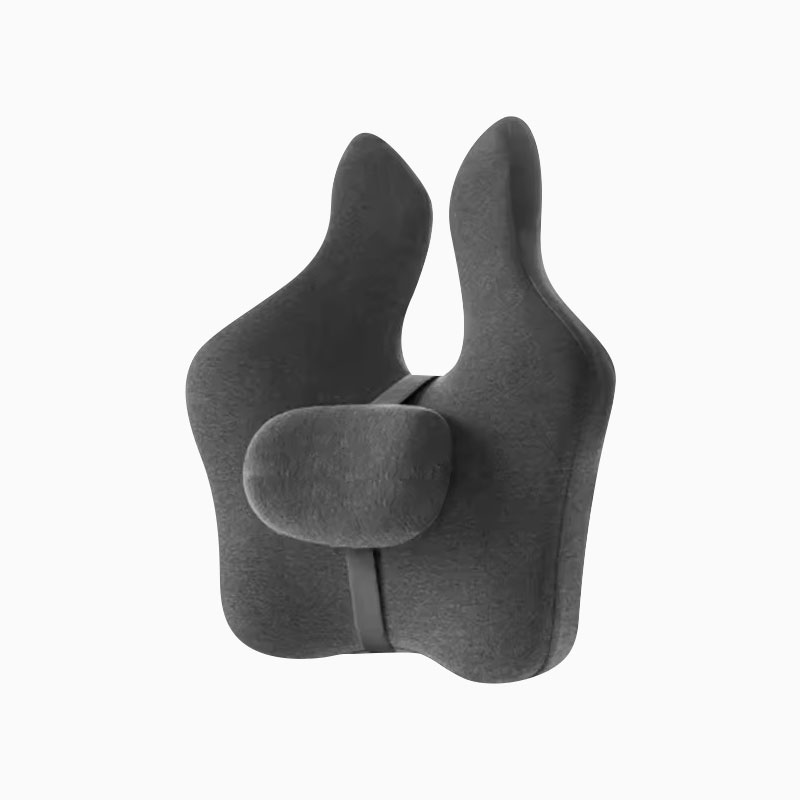
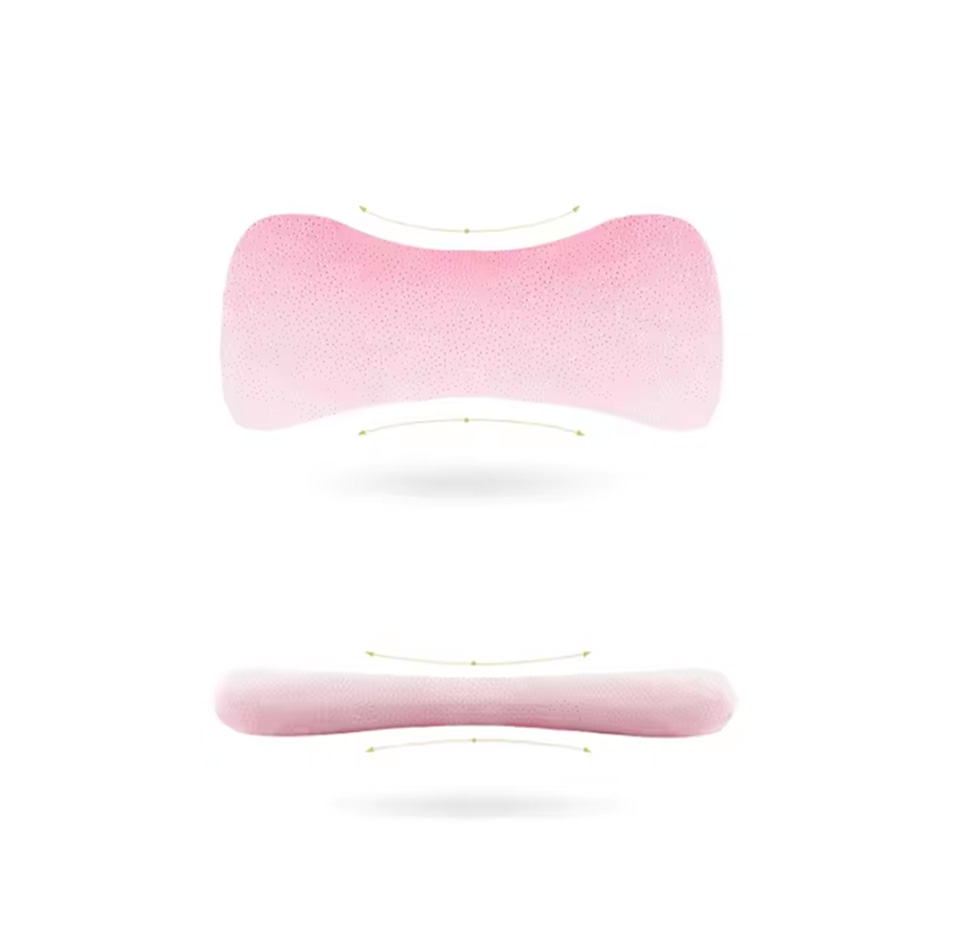 Wholesale Lumbar Pain Relieve Bed Waist Back Support Lumbar Cushion Suppliers, FNantong Bulawo Home Textile Co,. Ltd. is China wholesale Lumbar Pain Relieve Bed Waist Back Support Lumbar Cushion suppliers and Lumbar P...View Product →
Car Seat
Car seats are more reclined than office chairs, so the gap behind the lower back is deeper. Choose a cushion thick enough to fill that hollow and secure it so it does not slide during braking. An adjustable strap office lumbar pillow hooked around the seat stays in place. Never let the cushion push you so far forward that the seatbelt no longer fits across your shoulder and hips.
Bed or Recliner
In bed, use the cushion as a vertical backrest when reading, watching TV, or using a laptop against the headboard. Position it at beltline level with the curved side against your spine. Side sleepers can tuck a small cushion into the gap between waist and mattress, but a thick upright-seating cushion is too much for flat sleeping. A lumbar cushion is not a replacement for a sleep pillow.
How Does a Memory Foam Lumbar Cushion Work?
Memory foam appears in lumbar cushions for concrete reasons. Three material behaviors matter.
Slow rebound. Memory foam does not spring back instantly like ordinary sponge. It softens with body warmth and pressure, gradually molding to your specific curve. Two people can use the same cushion shape, and each still gets a personalized fit.
Pressure distribution. Hard surfaces concentrate load on a small area, which is why a flat chair back can feel like a pressure point on the spine. Memory foam spreads that load over a larger area, so no single spot bears the full weight of your upper body.
Density and firmness. Higher-density foam resists compression and suits heavier users; lower-density foam feels softer. For most office chairs, a medium-firm cushion that holds its shape is the better choice, because overly soft foam can collapse into a flat pad within weeks.
Compared with inflatable cushions, memory foam does not lose air, and compared with ordinary foam, it recovers its shape slowly and consistently. That sustained response is exactly what a support surface needs during hours of sitting.
How to Choose the Right Lumbar Cushion
Keep the decision framework simple by focusing on five factors.
- Shape. A contoured surface that mirrors the lumbar curve beats a flat pad. Look for a contoured memory foam lumbar support
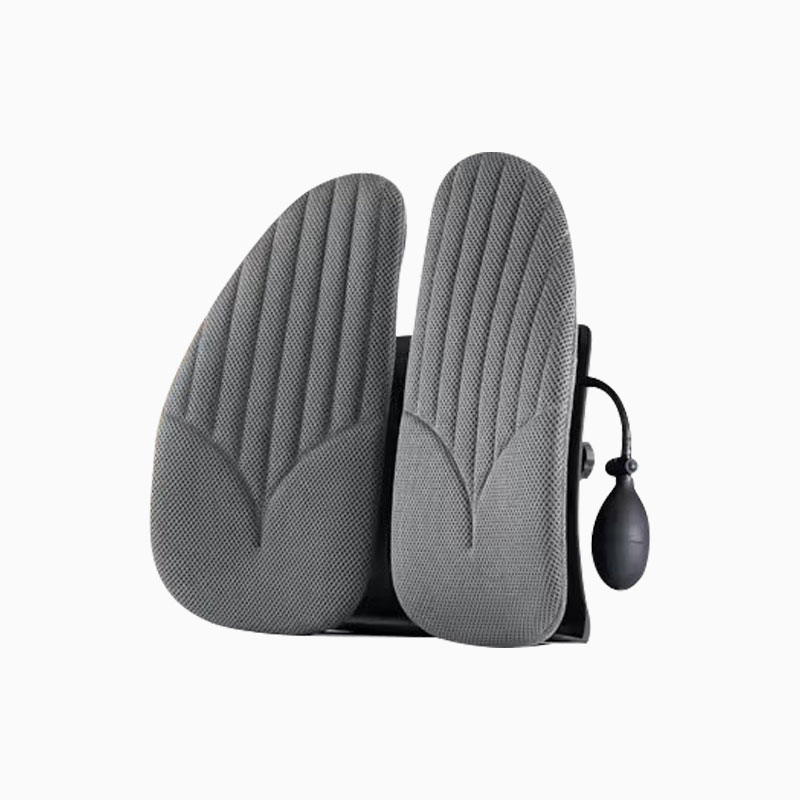
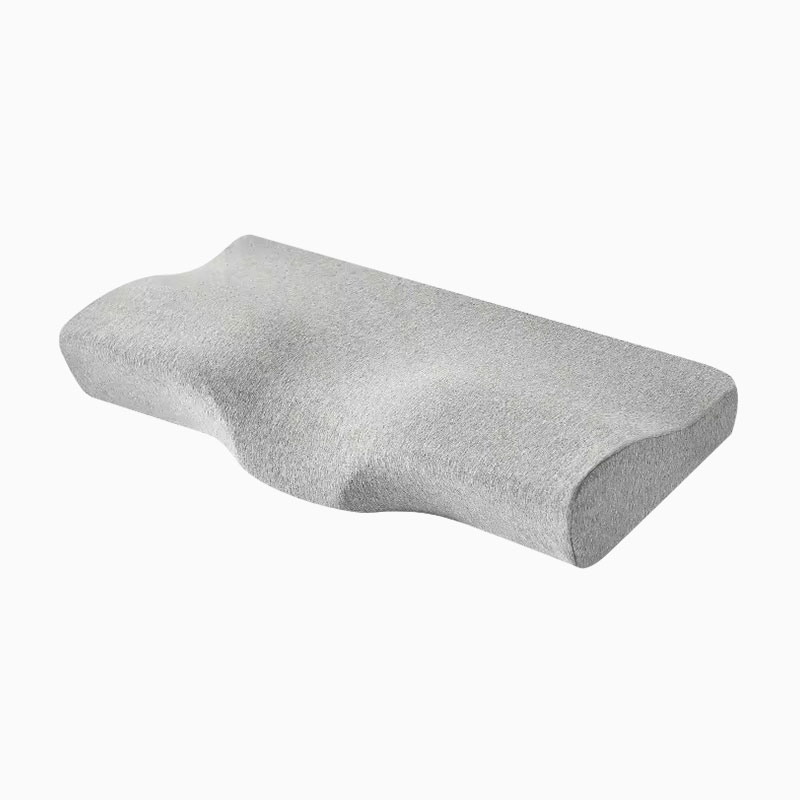 Wholesale Contoured Memory Foam Lumbar Support Factory, ManufacturersAs China Contoured Memory Foam Lumbar Support Manufacturers and Wholesale Factory, Nantong Bulawo Home Textile Co,. Ltd. provides types o...View Product → rather than a plain rectangular cushion to maintain the spine's natural posture.
 - Thickness. The pad should fill the gap, not push you forward. Too thick overcorrects the curve and creates a new ache; too thin does nothing. Match thickness to your body size and seat depth.
- Attachment. Choose a free-standing cushion if you use one chair in one position, and a strapped model if you move between office, car, and sofa.
- Cover material. Pick a breathable cover that is removable and washable. Memory foam itself should never go into a washing machine; only the cover is machine-washable.
- Density. Heavier users generally need firmer, higher-density foam; lighter users can choose a softer feel. Pick the firmness that keeps the spine neutral without forcing it.
Lumbar Cushion vs. Built-in Chair Lumbar Support
A fair question is whether you need a cushion when your chair already has lumbar support. It depends on how well that support fits you, since manufacturers design for an average body that matches few people precisely.
| Factor | Built-in lumbar support | Separate lumbar cushion |
|---|---|---|
| Fit adjustment | Limited to the chair's fixed range | Freely positioned to match your body |
| Different users | One setting serves everyone | Each user can move or replace it |
| Portability | Stays with one chair | Transfers from office to car to sofa |
| Support consistency | Usually firm, may not contour | Memory foam molds to the lumbar curve |
| Cost | Included with the chair | Low-cost upgrade for any seat |
If your chair's built-in support leaves your back comfortable after a full workday, no extra cushion is needed. If it hits too high, too low, or not at all, a memory foam lumbar cushion is an inexpensive, flexible fix that adapts to you.
Conclusion
In short, a lumbar cushion is used to fill the gap behind the lower back, hold the natural curve of the spine while sitting, and reduce the strain on muscles that would otherwise hold you upright. At a desk, in a car, or on a sofa, the result is the same: less fatigue, better posture, and less lower back discomfort.
If you sit for hours and notice recurring lower back tightness, a quality memory foam lumbar cushion is a low-cost first step. Buying from a manufacturer that designs and produces its own memory foam adds confidence that the density, rebound, and contour were specified for real support, not just appearance. Position it at beltline level and let the cushion do the work your back muscles should not have to do alone.
 previous post