 English
 عربى
عربىDo Lumbar Support Pillows Actually Work? Evidence & Guide
It Depends—and Here's What It Depends On
You sit down at your desk at 9 AM and feel fine. By 3 PM, your lower back is complaining. You have seen the advertisements, read the contradictory reviews, and now you are asking the honest question: do lumbar support pillows actually work? The short answer is yes—but only under the right conditions. A lumbar pillow works when it is well designed, placed against the right part of your back, and used with realistic expectations. Miss one of those, and the pillow becomes a decorative object that does little for your spine.
The word "actually" in that question is telling. Some users say their cushion changed their workday, while others report a wasted purchase. Both can be telling the truth; the difference usually comes down to design, fit, and positioning—all of which you can control. There is also published evidence to build on. A study indexed on PubMed (PMID 23826832) asked healthy adults to perform prolonged sitting tasks with their chair's regular backrest, then repeated the tasks with a lumbar pillow that included a posterior pelvic cutout. The pillow measurably improved comfort ratings. That is not proof that pillows cure back pain, but it is direct evidence that well-designed physical support improves real sitting comfort.
What the Evidence Actually Shows
Skepticism about lumbar pillows usually comes from a fair question: is the benefit real physics or placebo? That study helps because comfort was measured objectively rather than inferred from expectations. The design also explains the mechanism. A contoured pillow fills the gap between the seat back and the inward curve of the lower spine, helping it hold its natural forward curve. When that curve flattens during long sits, discs and ligaments take uneven load. A correctly positioned pillow spreads support and reduces that load.
The evidence has limits, and those limits should shape your expectations. Current studies focus mainly on short-term comfort and pressure distribution; long-term clinical outcomes need more research. So treat a lumbar pillow as a support tool that improves comfort and posture while sitting, not as a medical treatment. For persistent pain, a doctor or physical therapist is the right first stop.
Why Memory Foam Is the Material Most Likely to Work
Material choice affects results more than most buyers realize. Memory foam has become the standard in lumbar support because of its slow-rebound behavior: it softens with body heat and molds to the shape of your spine, spreading pressure over a wider area rather than pressing along one line. A cotton pillow compresses quickly, while an inflatable pillow can bulge and push the spine into an unnatural forward tilt. Memory foam sits between the two—firm enough to hold the lumbar curve, soft enough to stay comfortable for hours.
Within memory foam, density matters. A medium-to-firm pillow keeps its shape under load and gives real structure. One that is too soft collapses under your weight and does nothing; one that is too hard creates pressure points you will lean away from. Look for terms like "medium-firm" or "high-density," and replace the pillow when it loses its rebound.
The Real Difference Between a Pillow That Works and One That Doesn't
If the mechanics are sound, why do some people conclude that lumbar pillows do not work? In nearly every case, the pillow was set up to fail in one of five ways.
- Wrong placement. The pillow sits too high or too low. Lumbar support works only when it aligns with the curve of the lower spine; even a few inches off turns a useful cushion into a useless one.
- Wrong size. A small pillow on a large chair leaves the lower back unsupported; an oversized pillow on a compact seat pushes the pelvis forward.
- No way to stay in place. A pillow that slides when you shift weight stops working exactly when you need it. Straps, grips, or a non-slip base keep it effective.
- Wrong firmness. Too soft means the pillow flattens under your weight; too hard means your body avoids it. Both produce the same verdict: "it did not help."
- Unrealistic expectations. A posture-support cushion will not undo months of accumulated back trouble on its own. Treated as a cure rather than an assist, it will disappoint.
Four of the five failures are fixable with better choices and habits. So the real question is not "do lumbar support pillows work?" but "can one work for me?" The answer depends on exactly these variables.
How to Position a Lumbar Pillow Correctly (Step by Step)
Positioning turns an average pillow into an effective one. Run through these steps the first time you use a new cushion.
- Sit all the way back in the chair with your feet flat on the floor and your hips as far back as they will go.
- Find the top of your pelvis by pressing along the side of your hip; the bony ridge is the iliac crest. The upper edge of the pillow should sit at roughly this height.
- Let the pillow fill the gap between your lower back and the chair back. You want firm contact without an exaggerated arch—supported, not stretched.
- Check the seat depth. With your back against the pillow, two or three fingers of space should remain between the seat edge and the backs of your knees.
- Re-check the position whenever you change chairs. A desk chair, a car seat, and a dining chair all change the angle of your hips.
Finally, stand up every thirty to sixty minutes. The best pillow cannot replace movement, and regular posture changes do as much for your back as the cushion. For a more detailed walkthrough, see our detailed guide on using memory foam back support.
Where Lumbar Pillows Work Best—and Where They Reach Their Limits
The seat you sit in changes how well a lumbar pillow can work. The table below summarizes the main scenarios.
| Scenario | Effectiveness | Key consideration |
|---|---|---|
| Office chair with weak lumbar support | High | Fills the gap the backrest leaves open |
| Car seat | Moderate to high | Needs an elastic strap to stay in place |
| Sofa or deep soft chair | Limited | Sinking cushions change the angle and push the pillow out of position |
| Bed | Different purpose | Sleep support targets rest and alignment, not upright posture |
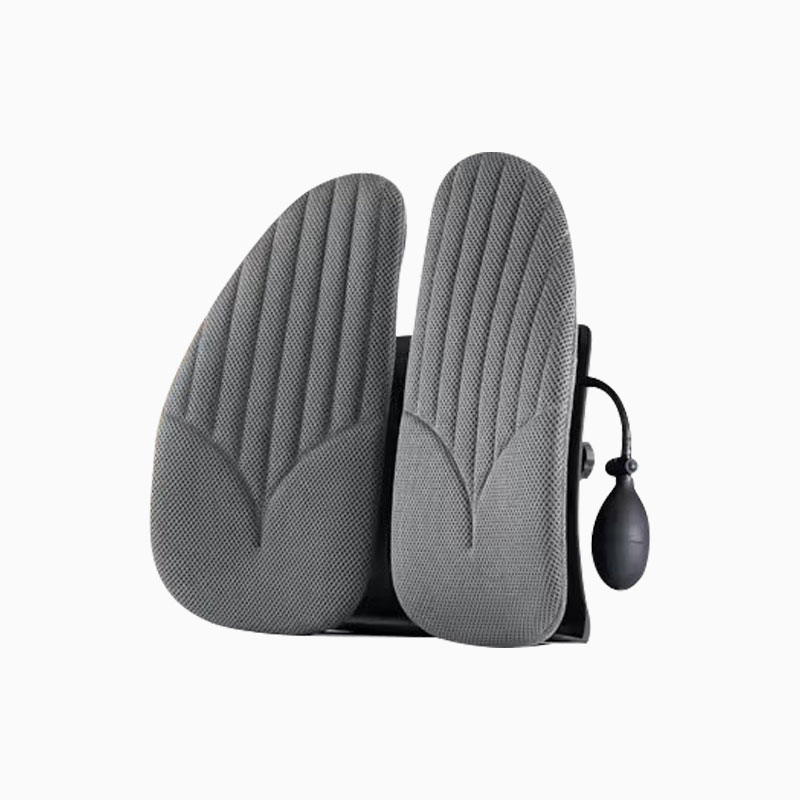
Office chairs are where lumbar pillows prove their value most consistently. Many standard backrests have a fixed curve that matches no one's spine, and built-in lumbar support is often weak. A pillow you can set at the right height compensates at a fraction of the cost of a new chair. A breathable mesh lumbar support cushion designed for office chairs is a practical option, especially where airflow matters.
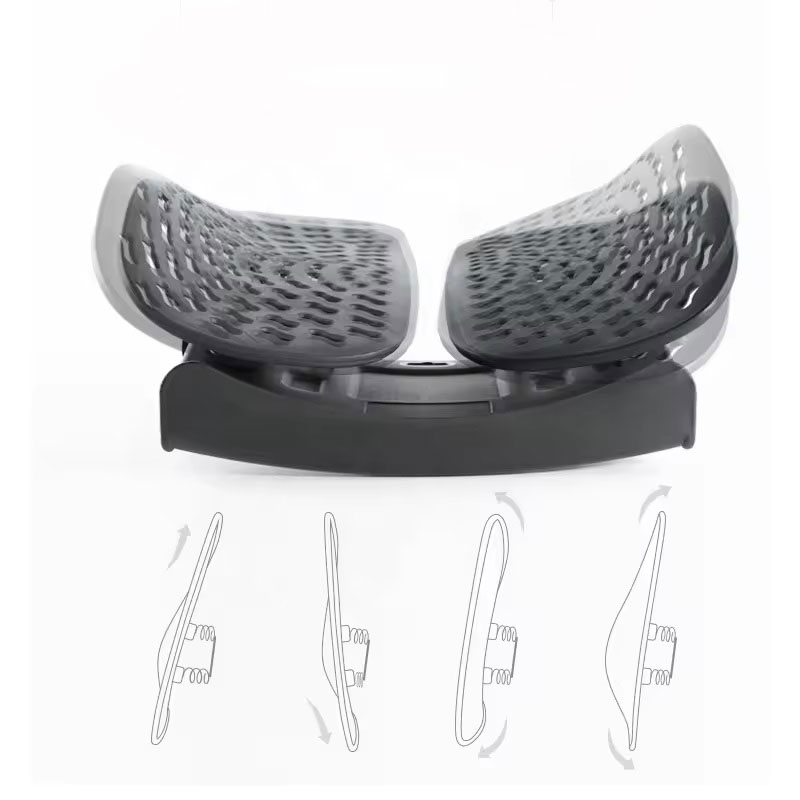 Wholesale Bravo Lumbar Back Support Mesh Breathable Cushion For Office Chair SupNantong Bulawo Home Textile Co,. Ltd. is China wholesale Bravo Lumbar Back Support Mesh Breathable Cushion For Office Chair suppliers and...View Product →
Car seats are workable but trickier. The seatback is more reclined than an office chair, and the molded contours are built for a generic body. Without help, a pillow slides against the seat fabric. The solution is simple: choose a model with an elastic strap that wraps around the seat. A lumbar support cushion with elastic strap for car seats is built for this situation, keeping the foam aligned with your spine on uneven roads.
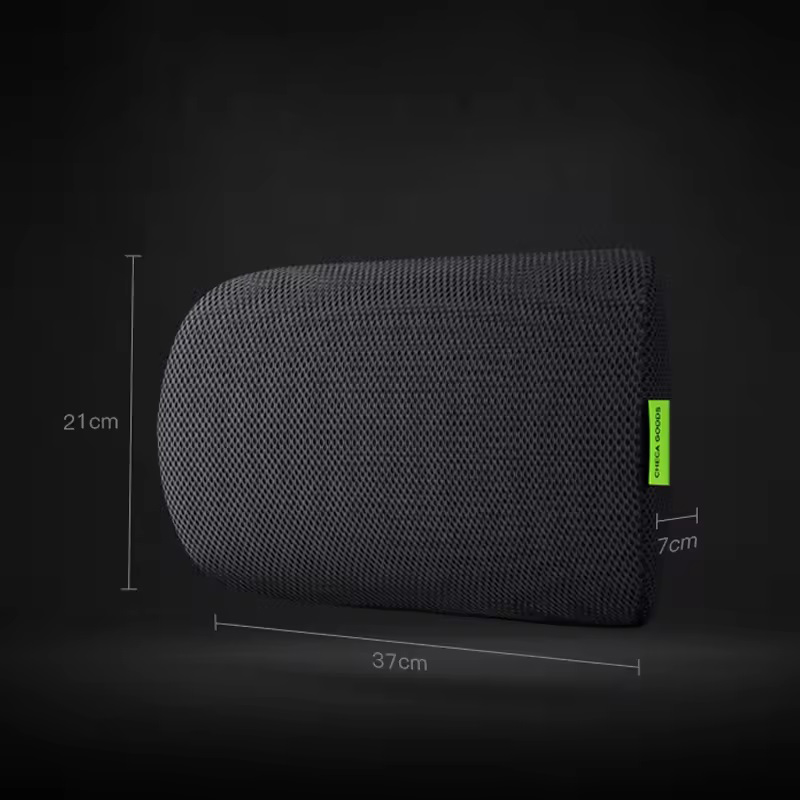 Wholesale Multi-Use Lumbar Support Pillow Memory Foam Lower Back Cushion with ElNantong Bulawo Home Textile Co,. Ltd. is China wholesale Multi-Use Lumbar Support Pillow Memory Foam Lower Back Cushion with Elastic Band...View Product →
Sofas and deep soft chairs are the least favorable setting. The seat compresses under your weight, tilting the hips backward, and the tall backrest pushes the pillow out of place. A firmer seat cushion can help, but gains are modest. On a bed, the goal changes completely: a lumbar pillow for sleep supports spinal alignment while lying down, a different job from upright posture. Choose a product designed for that purpose.
How to Choose a Lumbar Pillow That Will Actually Work for You
A pillow works only when it matches your body and your seat. Use these five criteria to separate a genuinely useful pillow from a generic piece of foam.
- Coverage and height. A pillow roughly 10 inches tall covers the lumbar curve for most adults without pressing into the ribs. Treat this as a starting point; torso length varies.
- Density and firmness. The foam should hold its shape when you lean back. If you can compress it fully with one hand, it is too soft to provide support.
- Shape and contour. Curved, winged, or contoured profiles match the natural curve better than flat pads. The shape must support the curve, not just fill space.
- Fixation. An elastic strap or a non-slip base keeps the support in place through hours of small movements. This single feature separates a set-and-forget pillow from one you adjust constantly.
- Washable cover. You will spend hours against that fabric every day; a removable, machine-washable cover protects hygiene and extends the life of the foam.
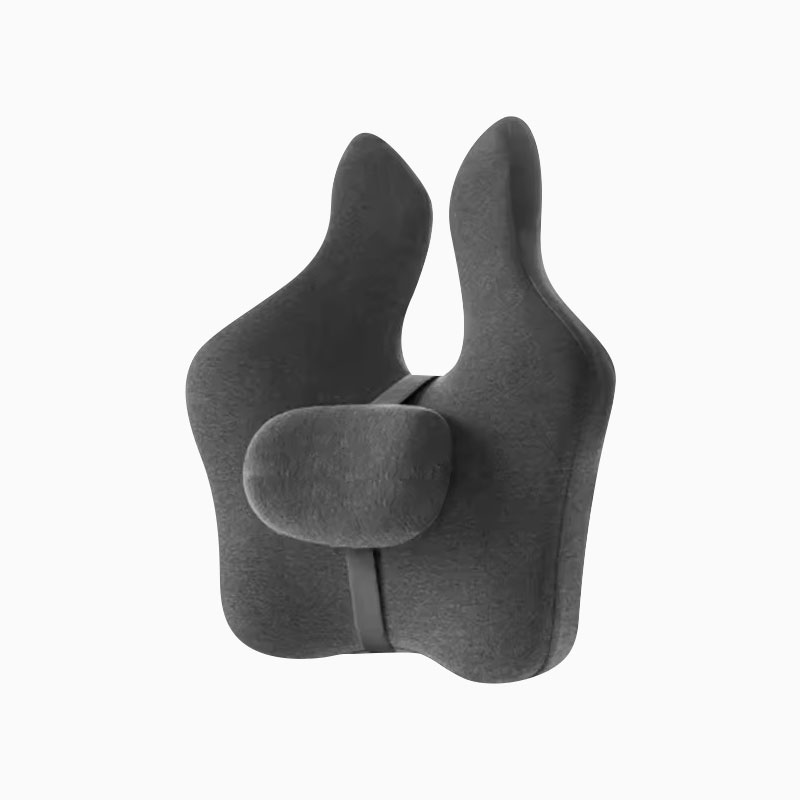
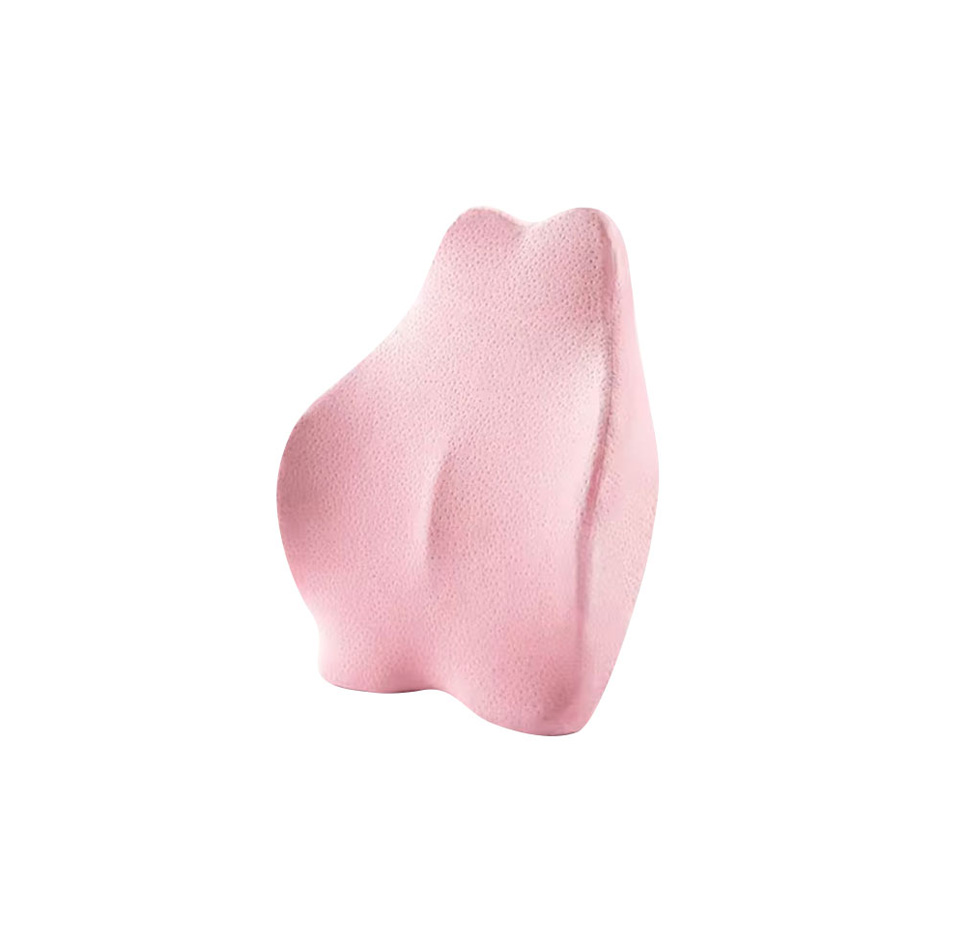
If you want a practical starting point, a memory foam lumbar cushion with thickened waist support combines a contoured profile, dense foam, and a removable cover, so it covers most of the criteria above without guesswork.
 Wholesale Bravo Memory Foam Thicken Lower Back Pain Relief Waist Support Lumbar Nantong Bulawo Home Textile Co,. Ltd. is China wholesale Bravo Memory Foam Thicken Lower Back Pain Relief Waist Support Lumbar Cushion su...View Product →
The Bottom Line: Do Lumbar Support Pillows Actually Work?
Yes—with conditions. A well-designed lumbar pillow, placed correctly in a seat that lacks its own lumbar support, measurably improves comfort during long sitting sessions. Published research supports this, and so does the everyday experience of many who use lumbar cushions in offices and cars. But the effect is not automatic. Choose a soft, flat pad with no way to hold it in place, position it poorly, and expect it to resolve pain by itself, and you will probably land in the "did not work" camp. Choose a contoured, medium-firm pillow, position it carefully, and pair it with regular movement breaks, and it becomes one of the most cost-effective upgrades to your daily sitting setup. If your chair lacks built-in lumbar support, a quality pillow is a smart first step. And if you want to understand why material matters, read why memory foam is a popular lumbar cushion material.
One final note: if you experience persistent, worsening, or unexplained back pain, see a doctor or a physical therapist. A lumbar pillow is a helpful sitting aid, not a substitute for professional medical advice.
 previous post