 English
 عربى
عربىHow to Sit on a Lumbar Cushion | Step-by-Step Positioning Guide
Understanding What a Lumbar Cushion Actually Does
You bought a lumbar cushion to stop the ache that builds up between your hips and shoulder blades after a long day at a desk. Yet after a week, your back feels no better — or worse. The product is rarely the problem. Most of the time, the issue is knowing how to sit on a lumbar cushion correctly.
Your lumbar spine — the five vertebrae labeled L1 through L5 — curves inward in a shape called lordosis. When you sit for long periods, your pelvis tilts backward and the curve flattens, adding pressure to the spinal discs and straining the muscles that hold you upright. A lumbar cushion fills the gap between your lower back and the chair, restoring the natural curve and reducing strain.
A cushion works like an armrest for your lower back. Memory foam is particularly effective because it conforms slowly to body heat and pressure. But not every chair needs one — if your chair already has a built-in lumbar support that fits you well, add the cushion only when you need extra support.
Preparing Your Chair Before You Sit
Set up the chair first; a lumbar cushion only works if the chair underneath it is adjusted correctly.
- Adjust the seat height. Your feet should rest flat on the floor with your knees bent at roughly 90 degrees, and your hips level with or slightly above your knees. If your feet dangle, use a footrest.
- Check the seat depth. Leave about 5 to 7 centimeters (two to three finger widths) between the back of your knees and the front edge of the chair.
- Position the cushion. Place it at the curve of your lower back — a few inches above your tailbone, around the belt line — not at your mid-back or shoulder blades.
- Secure the cushion. If it has straps, attach them around the chair back. If not, tuck it into the junction of the seat and backrest, or choose a non-slip backing.
Step-by-Step: How to Sit on a Lumbar Cushion Correctly
How you lower yourself into the chair decides whether the cushion works. Follow these five steps in order.
Step 1: Sit Back and Make Contact
Lower yourself onto the chair with your hips as far back as they can go, so your buttocks and sacrum touch the backrest or the lower edge of the cushion. Keep your upper body leaning slightly forward. You should feel fully supported, with your lower back hovering just in front of the cushion.
Step 2: Let the Cushion Meet Your Lumbar Curve
Slowly lean back until your lower back makes contact with the highest point of the cushion. It should cradle the inward curve of your spine — supporting it, not pushing it. If you feel a hard, localized pressure point, the cushion is too thick, too firm, or placed too high. Broad, even pressure is the goal.
Step 3: Adjust Your Upper Body and Shoulders
Roll your shoulders back and down, and center your head over your shoulders. Your ears should align with your shoulders, and your shoulders with your hips. Keep your chest open and your chin level, so you can breathe easily with a relaxed neck.
Step 4: Check Your Lower Body Alignment
Confirm that both feet are flat on the floor with your weight evenly distributed. Your thighs should be roughly parallel to the ground, your knees bent at about 90 degrees, and your hips slightly higher than your knees. If your feet do not reach the floor, use a footrest.
Step 5: Do the One-Minute Test
Stay in this position for one minute. Check whether the cushion keeps steady contact with your lower back, whether any pressure point exists, and whether you are breathing comfortably. If something feels off, adjust the cushion's height or depth and repeat.
Common Mistakes to Avoid When Using a Lumbar Cushion
Even with the right cushion, small positioning errors can turn a supportive tool into a source of pain. Here are the most common mistakes and how to fix them.
- Cushion placed too high. It pushes into the thoracic spine or between the shoulder blades, causing overextension. Move it down to the lumbar curve, around the belt line.
- Cushion placed too low. Resting on the sacrum or tailbone, it tilts the pelvis forward and tightens the hip flexors. Shift it upward until it meets the lumbar curve.
- Cushion too thick or too firm. Over-supporting the lumbar area increases pressure on the spinal joints and can worsen pain. Switch to a thinner or softer model.
- Cushion too thin or too soft. It collapses under your weight, and your back muscles work harder to keep you upright. Choose a cushion with enough structure to hold its shape.
- Sitting too long without a break. Even a perfectly positioned cushion cannot fix static posture. Stand up and move every 30 to 45 minutes.
- Skipping chair adjustments. The cushion works with seat height, seat depth, and armrest position. If the chair is poorly adjusted, the cushion can only partially compensate.
Adjusting Your Sitting Technique for Different Chairs
Not every seat is shaped the same way, so the same cushion can behave differently. Here is how to adapt in the three most common settings.
Office Chairs
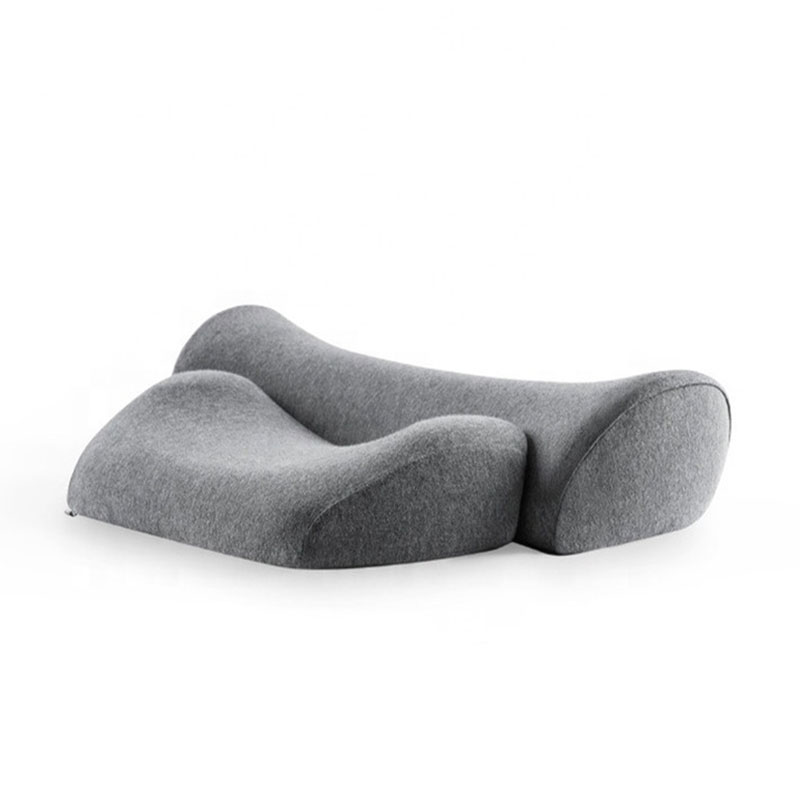
Most office chairs already have built-in lumbar support, so a separate cushion should supplement it rather than stack on top of it. If the chair's support already fits your curve, keep the cushion nearby and use it only when support fades. For chairs with weak or missing lumbar support, a mesh breathable lumbar back support cushion for office chairs maintains airflow and stays comfortable through long work sessions. Also check that the cushion's straps do not interfere with the chair's recline or swivel mechanism.
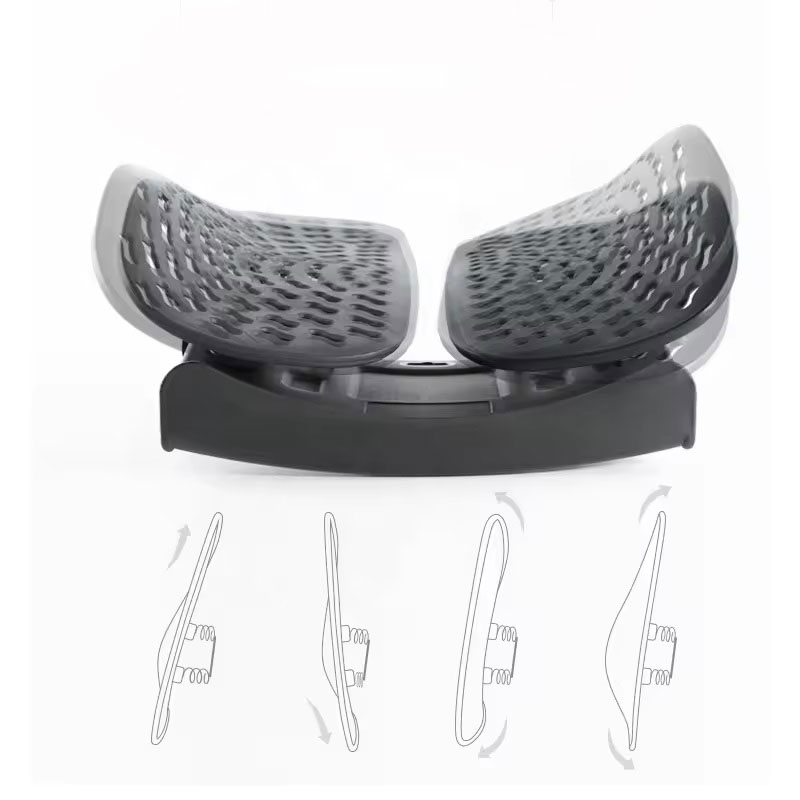 Wholesale Bravo Lumbar Back Support Mesh Breathable Cushion For Office Chair SupNantong Bulawo Home Textile Co,. Ltd. is China wholesale Bravo Lumbar Back Support Mesh Breathable Cushion For Office Chair suppliers and...View Product →
Car Seats
Car seats recline more than office chairs, which changes how the cushion sits against your back. It will slide or tilt if not securely fixed, so choose a cushion with straps or a non-slip back. Position it at your belt line. Make sure the cushion does not displace the seat belt — the lap belt should rest on your hip bones, not your abdomen.
Sofas and Low Seats
Sofas are deeper and much softer than task chairs, so a cushion may sink into the soft seat and lose its height. If this happens, place a firm seat pad underneath, or choose a thicker model that keeps its shape when compressed. When getting up, push yourself forward and use your legs to stand rather than twisting your lower back.
| Seating scenario | Main challenge | Recommended adjustment |
|---|---|---|
| Office chair | Built-in lumbar support may conflict with the cushion | Use the cushion only when extra support is needed; keep seat height and depth adjusted |
| Car seat | Cushion slides or tilts because of the reclined angle | Use a strapped or non-slip cushion; keep the seat belt on the hip bones |
| Sofa or low seat | Deep, soft seat absorbs the cushion's height | Add a firm seat pad or choose a thicker cushion; avoid twisting when standing |
How Long and How Often Should You Use a Lumbar Cushion?
A lumbar cushion is a posture-training tool, not a permanent crutch. If you never sit without it, your back muscles never learn to support your spine on their own.
Start by using the cushion for 30 to 60 minutes per day, then gradually extend the time. As you build muscle memory, remove the cushion for short intervals and notice how well you maintain the same alignment. Alternate between supported and unsupported sitting so your muscles stay active.
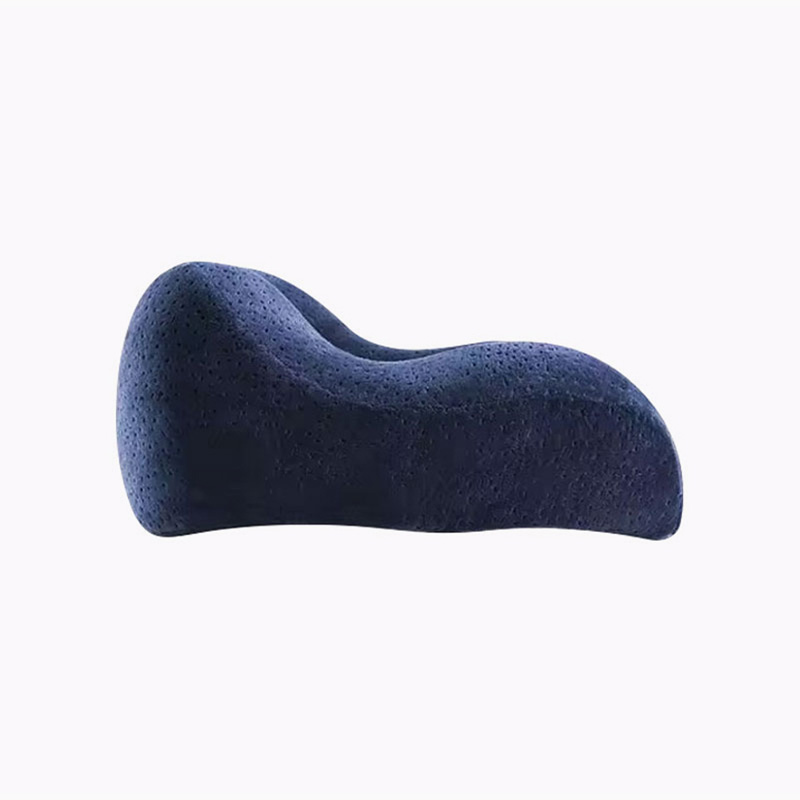
A lumbar cushion is designed for sitting only, not for sleep. If you need lower back support during rest, a gel-infused bamboo lumbar pillow for sleep serves a different purpose and should not be confused with a sitting cushion.
 Wholesale Memory Foam Thicken Lower Back Pain Relief Gel Bamboo Lumbar Pillow foNantong Bulawo Home Textile Co,. Ltd. is China wholesale Memory Foam Thicken Lower Back Pain Relief Gel Bamboo Lumbar Pillow for Sleeping...View Product →
Even with perfect cushion use, your body needs movement. Stand up every 30 to 45 minutes, stretch, and walk briefly. A stationary posture — even a well-supported one — is still hard on your back.
Choosing a Lumbar Cushion That Fits Your Body
How do you know if your current cushion is right for you? Measure your seated height, the cushion's height at its highest point, and the depth of the chair back. For most adults, a cushion height between 12 and 15 centimeters supports the lumbar curve without reaching the shoulder blades.
Once you sit, run three quick tests:
- The curve test: The cushion's highest point should sit at the inward curve of your lower back, around the third lumbar vertebra, not against the ribs or sacrum.
- The pressure test: You should feel broad, comfortable support rather than a hard point pressing into one spot. Localized pressure means the cushion is too thick or too firm.
- The stability test: The cushion should stay in place when you shift your weight, and your posture should remain upright without extra effort.
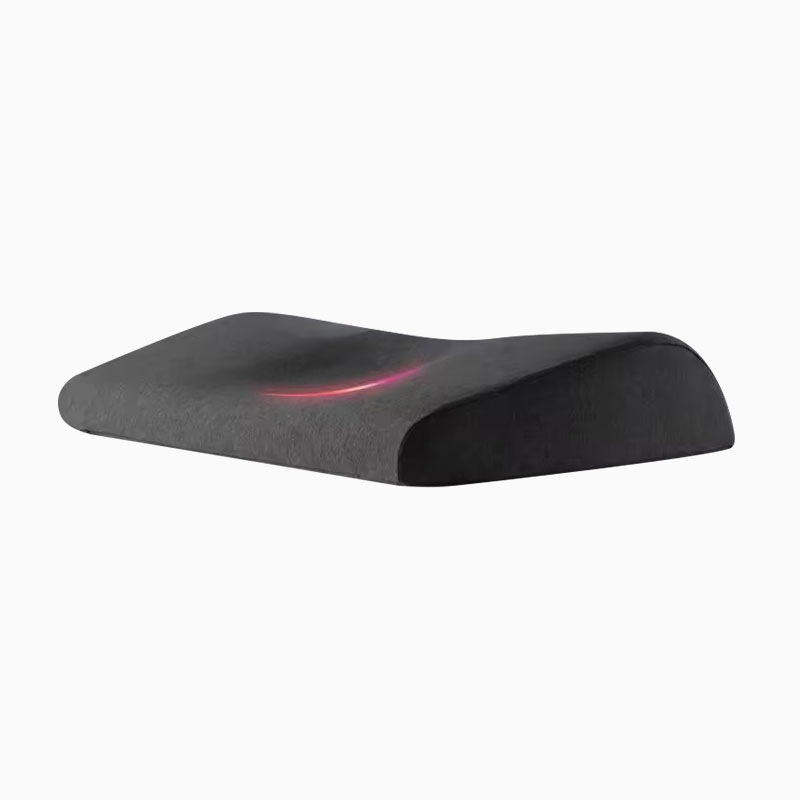
Memory foam density plays a large role in fit. Medium-density foam works well for most body types: soft enough to conform during the first minutes of sitting, yet firm enough to support the spine. Slender users often prefer softer foam, while heavier users need a firmer one. If you are unsure about thickness, a thickened memory foam lumbar cushion with a moderate density is a safe starting point.
 Wholesale Bravo Memory Foam Thicken Lower Back Pain Relief Waist Support Lumbar Nantong Bulawo Home Textile Co,. Ltd. is China wholesale Bravo Memory Foam Thicken Lower Back Pain Relief Waist Support Lumbar Cushion su...View Product →
Frequently Asked Questions
Can I use a lumbar cushion if my feet don't reach the floor? No — keep your feet flat on the floor or on a footrest. If your knees are higher than your hips, the pelvis tilts backward and the cushion cannot do its job.
Is a lumbar cushion safe for a herniated disc? Usually, yes, as long as it does not increase your pain. Check with your doctor or physical therapist first.
Does memory foam become softer over time? It undergoes slight permanent compression after years of use, but a good cushion keeps its shape for several years.
Should I use a seat cushion together with a lumbar cushion? If your chair is too deep or your hips feel pressure, yes. If the chair already supports your hips well, adding one is unnecessary.
 previous post