 English
 عربى
عربىWhat Is a Body Pillow and How Do You Choose the Right One
Memory Foam Body Pillow: Manufacturing Standards, Material Science, and a Complete Buying Reference
Every Memory Foam Body Pillow begins as raw polyurethane foam long before it ever reaches a bedroom. Behind the soft surface that a sleeper feels at night, there is a defined set of density values, firmness ratings, cutting tolerances, and stitching standards that determine whether the pillow will hold its shape after months of daily compression or collapse within weeks. This section looks at body pillow production and selection from the manufacturing side, covering the density and firmness data, the shape and dimension specifications, the quality control checkpoints used during production, and the practical guidance a buyer needs before choosing a size, a fill type, or a cover fabric.
A one-piece foam core spans the full body length, so the neck, shoulder, waist, hip, and knee are supported by the same continuous surface instead of several separate cushions pushed together.
Open-cell viscoelastic foam compresses under body heat and weight, then returns to its original profile gradually, which is why the material is described as slow-recovery rather than spring-back foam.
Weight that would otherwise concentrate on the shoulder or hip on a flat mattress surface is spread across a wider contact area, which lowers peak pressure at any single point.
Higher density foam resists sagging and permanent indentation over repeated compression cycles, which is a primary factor in how long a pillow keeps its original support level.
Foam Density and Firmness Reference
Density and firmness are not the same measurement, and mixing the two up is a common mistake when comparing foam products. Density describes the mass of the foam per cubic meter, while firmness, measured through Indentation Load Deflection (ILD), describes how much force is needed to compress the surface. A pillow can be dense and soft at the same time, or light and firm, depending on the foam formulation used during production. The table below lists the ranges typically used across body pillow production lines.
| Foam Density (kg/m³) | ILD Firmness Rating | Feel on Contact | Best Suited For |
| 28 – 40 | 10 – 14 | Soft, fast surface give | Lighter body weight, warm-climate sleepers |
| 41 – 55 | 14 – 18 | Balanced, moderate hug | Average body weight, side and back sleepers |
| 56 – 70 | 18 – 24 | Firm, slower sink-in | Heavier body weight, users needing added lift under the hip |
| 70+ | 24 and above | Very firm, minimal compression | Orthopedic-style support and long-term shape retention |
Production and Quality Control Checkpoints
Consistent foam quality depends on controlling each production stage rather than only inspecting the finished pillow. The stages below outline how a Memory Foam Body Pillow moves from raw material to a packaged unit.
Polyol and isocyanate are mixed under controlled temperature to trigger the foaming reaction. The block is left to cure for a set period so the cell structure stabilizes before cutting begins, which affects both density consistency and off-gassing levels.
Large foam blocks are shaped into the C, U, or J profile using horizontal band cutting or CNC contour cutting. Cutting tolerance directly affects whether the curve under the neck and the taper at the leg section match the intended design.
Sample units go through repeated compression cycling to measure height loss over time, along with indentation force deflection testing to confirm the finished piece matches the target firmness rating before mass production continues.
Cover panels are cut with seam allowance calculated for the curved shape, then double-stitched at stress points such as the inner bend of the C-shape, where the fabric experiences the most repeated tension from daily use.
Foam batches are screened for volatile organic compound levels before packaging, since fresh polyurethane foam naturally carries some initial odor that should fall within accepted limits and dissipate after airing.
Finished pillows are vacuum-compressed and rolled for shipping, which reduces carton volume significantly. Foam gradually expands back to full thickness within a defined window after unpacking, typically over one to three days.
Shapes and Dimensions
Body pillow shape determines which parts of the body receive direct contact. The three shapes used across most production lines are compared below, with dimensions listed in both centimeters and inches.
| Shape | Typical Length | Contact Zones | Notes on Fit |
| C-Shape | 120 cm / 47 in | Head, neck, back, one leg | Compact profile, suited to smaller bed frames |
| C-Shape (Extended) | 137 cm / 54 in | Head, neck, back, full leg length | Common mid-size option for average height users |
| U-Shape | 145 cm / 57 in | Both sides of the torso, abdomen area | Symmetrical support, no need to flip the pillow |
| J-Shape | 130 cm / 51 in | Head, upper torso, one arm | Shorter lower section, lighter overall fill weight |
| Straight Bolster | 150 cm / 59 in | Full body length, knee-to-knee placement | Uniform diameter along the entire length |
Matching a Body Pillow to Sleep Position
A C-shape or extended C-shape placed between the knees keeps the pelvis level. The top arm can rest along the upper curve instead of pressing into the mattress.
Placing the lower section under the knees reduces the arch in the lower back, which is a common source of discomfort for people who sleep flat on their back for long stretches.
A U-shape lets one side wrap around the abdomen while the other side supports the back, removing the need to reposition several separate pillows during the night.
A J-shape allows the upper body to stay supported while the lower half of the body moves freely, which suits people who change position several times before settling.
Placement Guide for Nightly Use
Positioning the pillow correctly has more effect on comfort than the shape alone. The sequence below covers the placement steps most commonly recommended by sleep product manufacturers.
- Lie on the mattress in the position used for most of the night, then bring the pillow against the front of the body before adjusting height.
- For side sleeping, bend the top knee and rest it on the lower section of the pillow while keeping the bottom leg straight.
- Slide the upper section under the neck rather than under the shoulder, so the head stays level with the spine.
- For back sleeping, lift the knees slightly and place the lower section underneath them to flatten the lower back curve against the mattress.
- Check that the pillow does not push the shoulders forward, since this can create tension in the upper back over a full night.
Daytime and Non-Sleep Applications
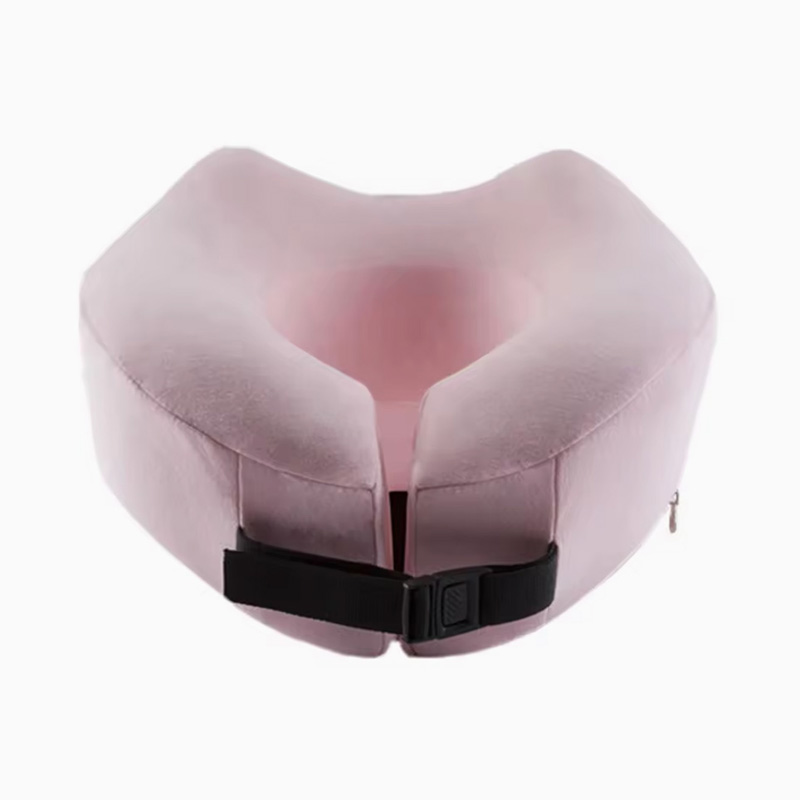
A body pillow is not limited to nighttime rest. Placed vertically along the spine while sitting up in bed, it functions as a backrest for reading or working from a laptop. Positioned under the calves while seated, it can relieve pressure on the lower legs during long periods at a desk. Travelers commonly fold the upper section around the neck during long journeys by car or train, using the same contour that supports the neck at night. Postpartum recovery routines also make use of the pillow as an arm and torso rest during nursing sessions, where the length allows both the baby and the supporting arm to rest at a consistent height.
Cover Fabric Options
Breathable, machine washable, and stretches slightly to follow the foam contour without bunching.
Moisture-wicking surface that stays cooler to the touch, suited to warmer sleeping environments.
Denser pile with a soft hand feel, generally paired with a zippered inner liner for shape retention.
A thin gel layer sits above the foam core to absorb surface heat before it transfers into the pillow.
Cleaning and Maintenance Schedule
Foam and fabric require different cleaning approaches, and treating them the same way is the most common cause of premature wear. The schedule below separates the two components.
| Component | Cleaning Method | Recommended Frequency | Avoid |
| Removable Cover | Machine wash, cold to warm water, mild detergent | Every one to two weeks | High heat drying, bleach-based products |
| Foam Core | Spot clean with a damp cloth and diluted mild detergent | As needed, or monthly wiping | Full submersion, direct sunlight drying |
| Zipper and Seams | Wipe with a dry cloth, check for loose thread | Monthly inspection | Forcing a stuck zipper without lubricant |
| Full Pillow | Air out in a ventilated room, away from direct heat | Every two weeks | Storage in sealed plastic for extended periods |
Shape Recovery and Long-Term Care
Memory foam is sensitive to temperature. In a cooler room the material feels firmer and compresses more slowly, while in a warmer room it softens and reacts faster to body heat. This is a normal property of viscoelastic foam rather than a defect. To keep the foam core from developing a permanent low spot, rotate the pillow occasionally so the same section is not compressed in the same direction every night. Fluffing and reshaping the cover after airing helps the fabric sit evenly over the foam rather than settling into folds that trap moisture.
Common Questions
Outside of nighttime use, it serves as a reading backrest, a leg elevation aid, and a nursing support, since the extended length keeps multiple body parts at a consistent height at once.
Yes, the two serve different functions. A topper adjusts the surface feel of the whole mattress, while the pillow provides targeted support at specific joints such as the knee and neck.
Look toward lower density foam paired with a bamboo or cooling gel-infused cover, since dense foam alone tends to retain more body heat against the skin.
Larger covers take longer to dry and should be reshaped while still slightly damp, otherwise the extended fabric panels can dry unevenly and pull at the seams.
 previous post